Lupe Anguiano’s amazing life story is the story of this country’s struggle to offer something greater than theoretical freedom to its citizens. As a nun and legendary civil rights activist, she fought for equal rights, women’s rights and equality for all in the U.S. federal and state governments, in business, in education and even in the institution of her beloved Catholic Church. Lupe believes deeply that everyone should have equal opportunities for education and employment. She fought hard to make those things available for at-risk youth, for women (through the groundbreaking ERA movement), for all minorities, for the under-privileged everywhere and for the agricultural worker in particular.
When we noted that life is about storytelling, Lupe agreed:
“We can create political or institutional church narratives incorporating a reverence for Godliness; but appreciating Godliness means supporting one’s own and others’ divine natures in any environment. It doesn’t mean creating a hierarchy of divine human natures. If we say we revere the Divine in man, we are saying we want to talk to the God within everyone and everything “
This important direction for enhanced culture building in any era is Lupe Anguiano’s message:
“I highly respect the academic world that tries to analyze the whys and wherefores of the world’s problems, but life is really very simple. So many of our instincts are organic to living in nature.”
She told the story of her recent visit tp Chalco, Mexico where she and her non-profit Stewards of the Earth are working with the Poor Clare Sisters of Divine Mercy to develop a sustainable training program for the indigenous people of the rain forest area in the Mexican state of Chiapas. Many of the women have been left by men migrating north. This is a model employment and education project including computer education to help women develop gainful employment skills that will help them find jobs in Mexico rather than seeking jobs in the U.S.
In the village Lupe sees amazing pineapple, banana and coffee bean vegetation growing wild everywhere for everyone to eat for free. She sees chickens and turkeys running around the village and wonders how they know where “home” is, so they will be fed. A local tells her:
“Well, we don’t know, but they do. That’s all that matters.”
Sure enough, the birds do go “home” after each day of roaming around freely. Lupe believes so many of the skills for living a meaningful human life are likewise, already within us.
“If they are already within us, they are part of our divine nature. When we fight others for power over our environment, we are not respecting our divine, inner natures, we are in conflict with them.”
Much of what Anguiano learned about the way to build a meaningful life and a great cultural story comes from her early childhood when she was taught to build a better self, first. Her father, Jose Anguiano, was an indigenous Huichole (“wheetchohlay”). His was an ancient and mythological religious tradition revering nature and the nature in man. The Huichole dwell high in the Sierra Madre Mountains, an isolated and communal people. They resisted cultural integration with the Spanish Conquistadors and still resist modernity and urban Mexican culture today. Jose Anguiano’s mother was a maid in the wealthy Spanish Gonzalez family. It was their well educated daughter Rosario who would become Lupe’s mother.
The difficulties her parents faced in rebelling against their respective cultural and class traditions became tools they used to teach their children how to survive. Lupe and her siblings learned that it is through love for self, for nature, and for others, first. And, she believes:
“ ..most importantly through the humility it takes to live a life through a love for God. It is Godliness that matters above all else.”
When Lupe’s father moved his young family to Colorado to find work on the Santa Fe railroad, the family adjusted to still more cultural integration. There was no institutional church in their new environs, so Lupe’s mother taught her children about faith, God and Christianity by telling them stories from the Bible, not by teaching them Catholic institutional doctrine. Rosario was not only highly educated but was also such a gifted, eloquent storyteller. Lupe actually experiences God through her mother’s stories, imagining little Jesus as a personal friend. Lupe explained that Rosario’s Bible stories defined an inclusive spiritual narrative:
“I was meditating about the great pain we are experiencing right now as a country and about the great tribulations of the US and world governments at any time. But the cultural story you want to inhabit is not always the one the government offers you. You are Huichole, Aztec, Mayan, a New Yorker, a Californian, a European, an African, an Asian, whatever. You want a better life for your children than you had. That requires responsible sustainability customs and legislation that ensures the rights of everyone to live in peace, recognizing the wealth inherent within all peoples, species and nature.”
This is the core of Lupe’s passion for social activism. She thinks the desire to control and dominate other people, cultures, world resources and wealth is the carnal struggle of all governments on earth, of all businesses and even of all institutionalized churches which actually often function as big businesses themselves. Though indigenous peoples are not isolated on reservations in Mexico as they are in the U.S . Both countries are huge economic mouths demanding to be fed. Lupe reminded us:
“When you think of the issue of slavery which was such a horror, remember, cheap labor is slavery too. The agricultural workers in this country know the historic value placed on using the fruits of the earth as money. But you can’t eat money!”
We asked Lupe how she inspires young people to be activists for their culture and planet. She teaches young kids to experience life before they can fight for it. For instance as a nun she taught her Confirmation Class for students from local East Los Angeles high schools to follow three simple steps when dealing with unjust situations:
“First observe, then judge, then take action.” Once more Lupe reminds us life is not complicated:
“If you experience forgiveness and love, you can learn it. Asking questions is how we learn what can be. Experience is how we learn what is. Both are important for negotiating life and for being an activist for the divine life within us all.”
Lupe loves Plato for his fantasy of a divine life where we are all puppets, bereft of a true form unto ourselves. But she really loves St. Augustine, the son of a wealthy African and a European Christian mother who prayed for his conversion as he travelled the world seeking truth and debating his educated father.
Sometimes Lupe has trouble with Church Institutions that don’t teach a reverence for the divine nature in women, in the agricultural worker, in at-risk youth or in the underprivileged. More often, she has trouble understanding why the US, with a market economy that already is a world without borders, eschews non-polluting energy sources, but instead supports the coal and oil resources that exploit the planet and has plans to build a wall dividing us from our neighbor.
“Building a wall? It’s so stupid. I mean, how did that work out for East and West Germans? We need an immigration policy that is compatible with our economic one. It’s interesting that Bill Gates wants to open Microsoft up to employees from all over the world, for instance.”
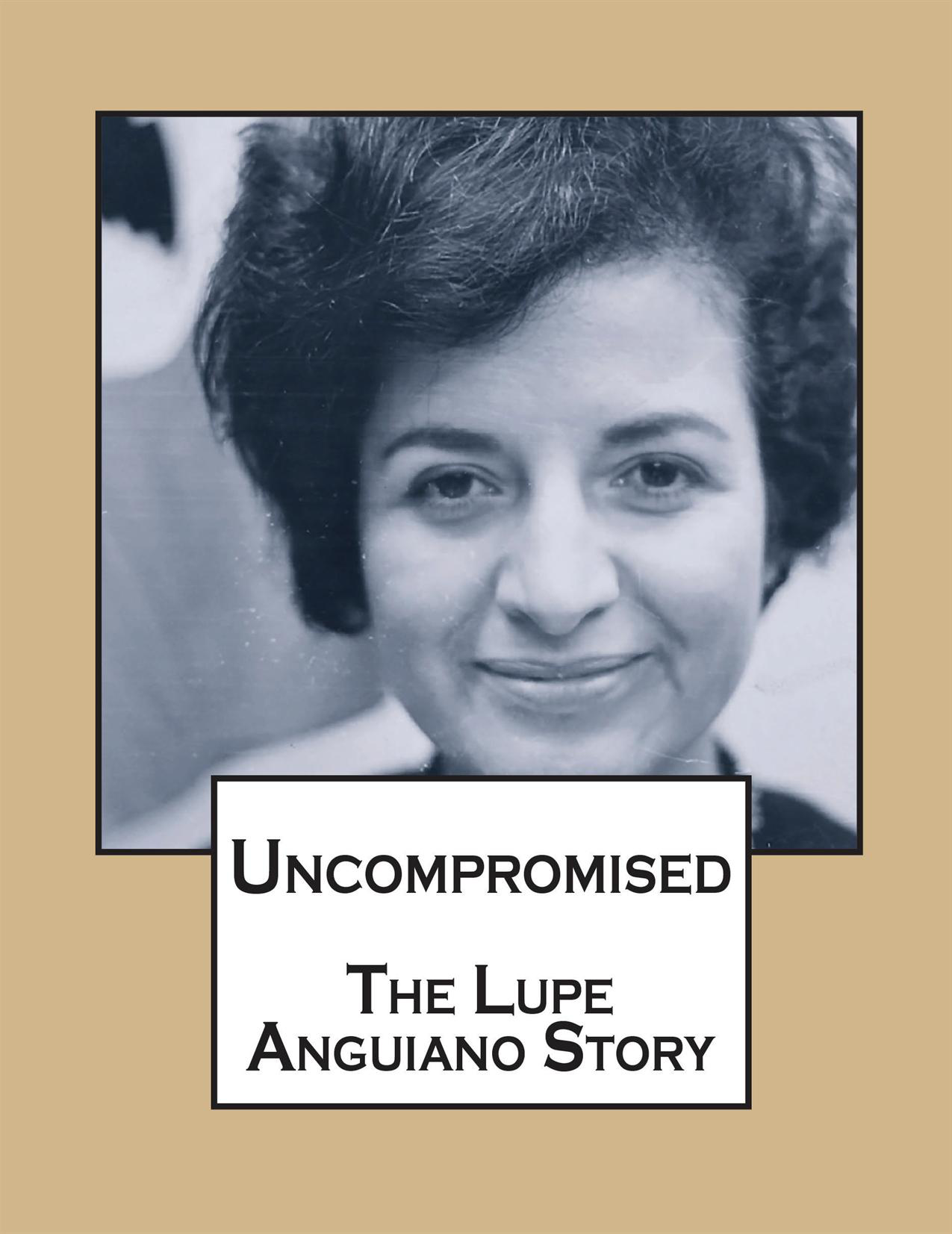
This is the savviness that author Debora Wright captures about Lupe, in her excellent, exhaustive biography of one of the most remarkable social activists who’ve helped build this country. It is called “Uncompromised: The Lupe Anguiano Story.” Wright captures Lupe’s early life as a nun, before she left the Church to become an activist and beyond. It is an inspiring work.
The systemic underfunding of education in this country undermines opportunities for American kids to compete in a global economy because they are competing with workers from countries with far better educational systems.. Lupe acknowledges:
“Yes our educational system is broken. So are our governmental and economic systems. But technology is leading young people to an excellent sense of what to learn and how to do so, for free, wherever they live. Economic opportunity for all is what matters. If people can make fair wages, they can grow, prosper and learn. Governments should be supporting that, not impinging upon anyone’s right to see God through a Muslim, Christian, Jewish, or Buddhist lens. The government in this country can barely handle its own job! It shouldn’t be in anyone’s bedroom or faith.”
We believe courageous, pioneering activism is exactly what is required to achieve meaningful change for the numerous groups on whose behalf she has struggled her whole life. Her leadership has brought improvement in the lives of East Los Angeles gang members, the US agricultural worker (working with Cesar Chavez, a family friend), to Watts residents after the Watts Riots, through the development of programs for bi-lingual education, for the ERA and women’s rights, for welfare reform and sustainability issues. For example, Lupe was determined to change the AFDC Welfare System from an income maintenance policy to employment skills training, coupled with a one-year emergency temporary support system that included childcare, healthcare, etc. Her solution to welfare reform is thriving at the Center for Work Education and Employment in Denver, Colorado because they followed that model which Lupe developed and put into place there over 35 years ago. This solution to welfare reform is still relevant today but sadly has not yet been implemented on a national level.
In our interview with Lupe, we found her to be very humble about her many successes and accolades. We do think Lupe especially enjoyed winning the first annual “Wonder Woman Award” in 1981 at the Ritz Carlton in New York. There were 1,300 nominees, Lupe was one of the seventeen winners. The award offered a cash prize which Lupe promptly used to launch a “Get Off Welfare” initiative in New York. The award was given to mark the 30th anniversary of the eponymous comic book heroine to represent “compassion, honesty,courage, strength and wisdom.” These are the very qualities Lupe encourages all women to find in themselves, for themselves.
When Lupe Anguiano’s archives were dedicated to the Chicano Studies Archives at UCLA, Gloria Steinem addressed the audience in a speech which included these quotes:
“She understood, as Cesar Chavez understood, that there are two churches, the church of people and the church of buildings. She always stood for the church of the people. She did something practical about the embarrassment and humiliation of the welfare system and the dependency it imposed upon women at a time when that issue was very little understood. She helped to found the National Women’s Political Caucus and was key to the National Women’s Conference in Huston, which was a kind of “Constitutional Convention” for women.”
Steinem concluded:
”We have realized the worth of Lupe’s archives. She has faced the single most difficult adversary of anyone trying to make change. Lupe understands the arts of acting ethically and effectively, behaving as if everything we do matters. All of those who look in the future at the words and the deeds of Lupe Anguiano are going to have hope.”
Indeed.
To learn more about Lupe Anguiano: Her biography “Uncompromised” by author Debora Wright is available on Amazon Books. A live interview with Lupe Anguiano in the documentary “I Know a Woman Like That” is available on the following digital platforms: Amazon, Vudu and Vimeo on Demand. There is also a recent live radio interview with Lupe: aspectsofwriting.com, which is archived on YouTube.
Creative Credits
- Written by
- Leonora Francesca Flores
- Image courtesy
- Scott Young