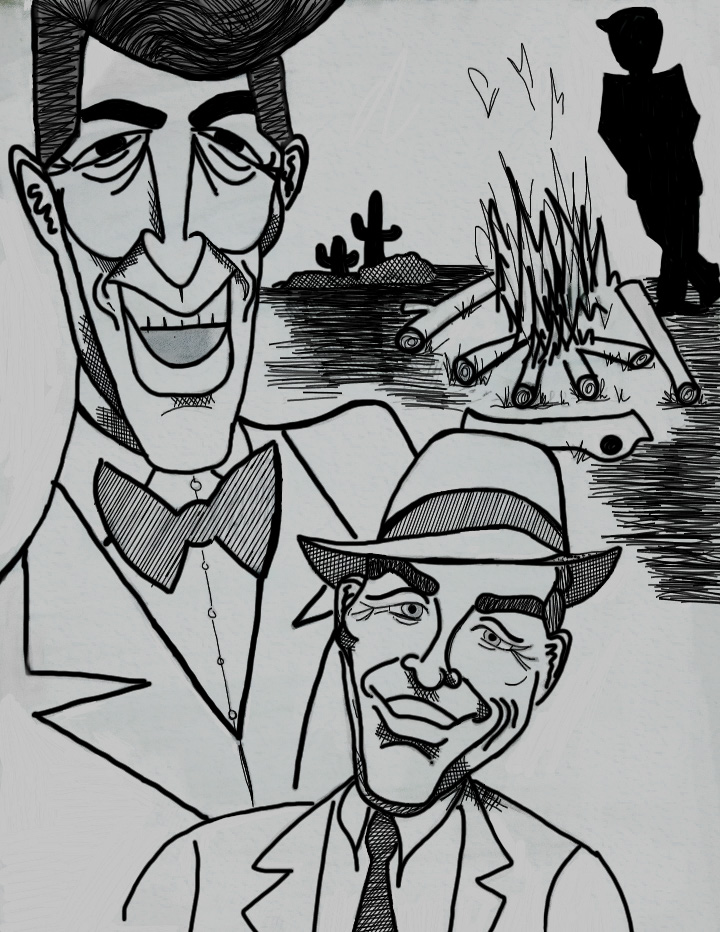
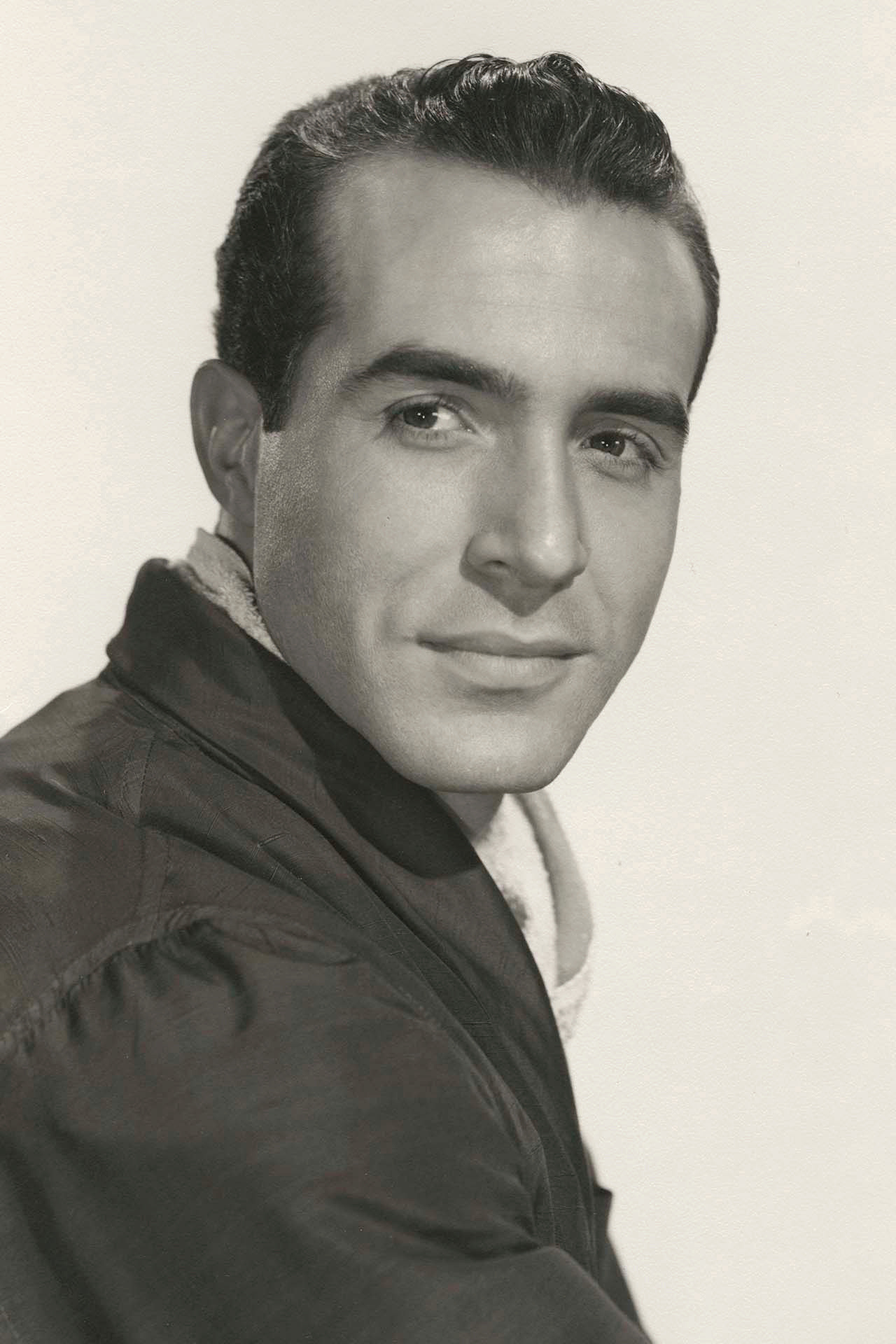
Tenacity and perseverance: these traits sustained Mexican actor Ricardo Montalbán while building an impressive list of credits over 65+ years. Having completed over 100 film and TV projects in addition to his work in theater, Montalbán never believed any of the roles he was offered—or played—to be great, largely due to the typecasting of Latinos. Still, Montalbán gave everything he had to make his characters great.
From his many performances to his commitment to help Latinos succeed in Hollywood, Montalbán’s son-in-law, Gilbert Smith, says the actor’s greatest legacy is his tireless pursuit for a work ethic matched by few as well as in opening doors for others who wish to make acting their first profession. Of his father-in-law who passed away in 2009, Smith said, “Ricardo Montalbán left so much for us to savor and to share with future generations seeking equality in an unbalanced society.”
Montalbán was born in Mexico City in 1920 and grew up in the city of Torreón in the Mexican state of Coahuila. As a child, he dreamt of being an architect or engineer. That is, until he moved to Los Angeles to live with an older brother, Carlos, and get an American education. In high school, a teacher who saw something in Montalbán gave him the lead role in a school play; the experience would ignite a passion that let him know he was destined to become an actor.
When he moved with Carlos to New York City around the age of 20, he gained some momentum appearing in short musical films, including a lead role in “He’s a Latin from Staten Island.” However, he would soon go home to help care for his dying mother. Back in Mexico, Montalbán would become a South American movie star, appearing in around a dozen Spanish-language films. It was this notoriety that would allow him to keep his given name as his screen name upon his signing with Metro-Goldwyn-Mayer (MGM) in 1947—versus changing it to Ricky Martin as Hollywood executives suggested. While Montalbán had dreamed of coming to America as a child, having seen its beauty in movies, he had a deep appreciation of his Latino roots and wished to honor them and keep his family’s name.
Smith shared, “He only applied for citizenship in the U.S. after dual passports for Mexican citizens were allowed with the U.S. Ricardo Montalbán loved Mexico, as he stated, like loving his mother. The United States was like his best friend.”
At the time of his signing with MGM, Montalbán had already started his own family. He had married American actress Georgiana Young in 1944, and she had just given birth to their first child. The couple would remain married until Young’s passing in 2007 and have four children—two girls and two boys. Over the years, Montalbán did what he needed to take care of his growing family, even when it meant taking on roles he didn’t agree with.
“In the 1940–1970 era, the Hollywood producers and studios created roles with negative Mexican stereotypes and basically derogatory roles that portrayed Mexicans as bandits and unsavory characters,” explained Smith. “Where were the roles depicting architects, artists, or doctors from Mexico? Producers would [tell Montalbán] that those positive roles were not ‘colorful’.”
MGM painted Montalbán as the “Latin lover,” and the next several years he spent with them would be marked with highs and lows.
For his Hollywood debut, he portrayed a bullfighter alongside Esther Williams in “Fiesta.” Over the next two years, he did two more films with Williams: “On an Island With You” and “Neptune’s Daughter.” His first leading role allowed him to portray a Mexican federal police agent in “Border Incident.” The next project, “Battleground,” in which he played a soldier, won multiple awards including “Best Story and Screenplay.” Yet, he would soon resume his role as a Latin lover; one film in which he starred alongside Lana Turner was aptly titled “Latin Lovers.” He also played a Mexican renegade in “The Mark of the Renegade” and a Native American in “Across the Wide Missouri” with Clark Gable—the latter role would result in a spinal injury that left Montalbán with a limp, though viewers would never know.
It was around this time he broke into live television while continuing to be featured in American as well as Mexican films. He also returned to the stage and made his Broadway debut in “Seventh Heaven.” A couple years later, he starred alongside Lena Horne in the Broadway musical “Jamaica” and earned a Tony Award nomination.
Yet, Montalbán is best known for his work on the renowned TV series “Fantasy Island.” From 1977 to 1984, he portrayed Mr. Roarke—the host of a mysterious island where guests are permitted to fulfill their fantasies, facing challenges along the way. The next year, he would join Aaron Spelling’s “Dynasty” spin-off, “The Colbys,” a primetime soap opera on ABC that ran for two seasons. Before and after his runs as Mr. Roarke and Zach Powers on “The Colbys,” Montalbán also had guest appearances on many well-known TV shows, including “How the West Was Won,” for which he won an Emmy. In the first season of “Star Trek” in 1967, he played the role of villain Khan Noonien Singh and would reprise the role of Singh in the motion picture, “Star Trek II: Wrath of Khan” in 1982. Smith says this was a project Montalbán enjoyed.
“Being a villain allowed him to explore actions or attitudes that he would never allow to be part of his everyday life,” shared Smith. “He was a perfectly balanced man with strong instincts and was fearless.”
This was not only in his performance. Montalbán was outspoken about the portrayal of Mexicans on TV and in films and believed that Hollywood didn’t write parts for Mexicans. His characters generally hailed from Cuba or Brazil—never from Mexico. When Mexican characters were portrayed, they were engaged in criminal activity or were lazy and comedic. He would tell MGM directors that they should portray the real lives of Mexicans alongside these characters. Because of his stance, Montalbán said he was seen as a militant which cost him jobs. He learned that, if he wanted to see progress, he would need to work to develop good actors, directors, and other industry professionals from within the Latino community.
In 1970, Ricardo Montalbán co-founded NOSOTROS—today’s oldest Latino arts advocacy organization in the U.S.—on the principle of unity. Over a cup of coffee in a Los Angeles cafeteria on the corner of Beverly and La Cienega Boulevards, Montalbán met with Gilbert Avila, Robert Apodaca, Luis De Cordoba, Val De Vargas, and Rodolfo Hoyos to strategically change the stereotypical image of Latino actors in Hollywood. The original Nosotros board included Desi Arnaz, Vicki Carr, and Anthony Quinn, propelling it to become a training ground for actors such as Edward James Olmos, Salma Hayek, Lupe Ontiveros, and Eva Longoria.
The purpose of Nosotros, which is Spanish for ‘we,’ is to enable opportunity and drive change for Latinos in Hollywood. To do so, the non-profit offers diverse programs for the arts and education, as well as mentorship, to assist Latino individuals of any age, especially the youth, to gain entry—and succeed—in the entertainment industry.
“Ricardo’s mission was simple… for Latinos voices to be heard,” said Joel M. Gonzales, accomplished film producer and current president of Nosotros, since 2010. “Over the years, the organization has been able to positively impact the Latino community. We’ve been able to provide tools and the proper resources for our members to learn how to approach the entertainment industry. We all have a story to tell.” He added, “Our voices echo ‘stronger together’—that is the essence of what Nosotros is all about.”
In August of 1971, Montalbán held the inaugural Golden Eagle Awards at the historic Hollywood Bowl. It was Hollywood’s first-ever Latino award show—a full-on musical event—to honor accomplished actors, activists, and industry professionals that used their influence and resources to support Latinos both on- and off-screen and celebrated the launch of Nosotros. Frank Sinatra, Lucille Ball, Anthony Quinn, Charlton Heston, and many other big names and Latino allies attended that event.
In 1999, Nosotros and many Montalbán supporters helped purchase a historic theater—the Doolittle Theatre—near the intersection of Hollywood and Vine. The theater’s name would eventually change to The Montalbán, making it the first venue of its size to be named after a Latino actor living in the United States. The theatre supports both the Montalbán Foundation and Nosotros’ goals by providing a place for rising Latino talent to learn and practice skills in the performing arts. It also continues to serve as the venue for the annual Golden Eagle Awards, with the next event scheduled for August 2023.
“[Montalbán] was viewed by some in the industry as a disruptive personality,” said Smith. “Ironically, being disruptive is the very core of our innovation today with technology and with the education and network opportunities that we are offering. We are working to co-develop programs that increase awareness for actors of color or cultural minorities. We are working together to seek equality with opportunities growing.”
Ricardo Montalbán joined an impressive list of acting professionals in 1993 when he was awarded the Lifetime Achievement Award by the Screen Actors Guild. Yet, the opportunities would continue for the talented and versatile actor well into his eighties. In a wheelchair, he played the part of Grandpa Valentin Avellan in two “Spy Kids” movies. His smooth voice would be called upon for feature in commercials and animated TV shows, including episodes of “Kim Possible”, even until his final year—Montalbán’s dedication to his craft unwavering.
Gonzales is currently working with Wondery, a publisher of award-winning podcasts, to develop a docu-podcast that will highlight Ricardo’s story, his life contributions, and his impact in the industry as the pioneer of diversity and inclusion before, Gonzales says, they became the buzzwords of today.
Felix Magazine is proud to dedicate this issue to the memory of Ricardo Montalbán and his admirable efforts to not only achieve equality for Latinos in Hollywood but also unify people across borders. Proceeds of Felix Magazine benefit the Aparecio Foundation which is partnering with Nosotros this holiday season to provide meal boxes to families of low-income female students in Los Angeles.
Creative Credits
- Written by
- Jessica Catignani
- Images courtesy
- Ricardo Montalbán Foundation