’m walking down the aisle of a Boeing 737. I find my seat, 16B, and toss my jacket onto it, signifying to the man sitting in the aisle seat that I’ll need to scoot in. I smile at him, and he stands up. I open the overhead bin and squat down to pick up my overpacked suitcase. It’s just on the verge of being too heavy for me, but I manage to lift it up to my eye level. I lean back, trying to ground my body for as much strength as I can gather, and, with the suitcase still suspended, I hear:
“You got it?”
The combination of that question and the presence of him and another man behind me hovering over me — as if I wouldn’t be able to lift something I packed and got there by myself—was all I needed to plant my legs, stiffen my back and use every ounce of strength in me to get that suitcase in the compartment above.
“I got it.”
I said smiling.
“Thanks.”
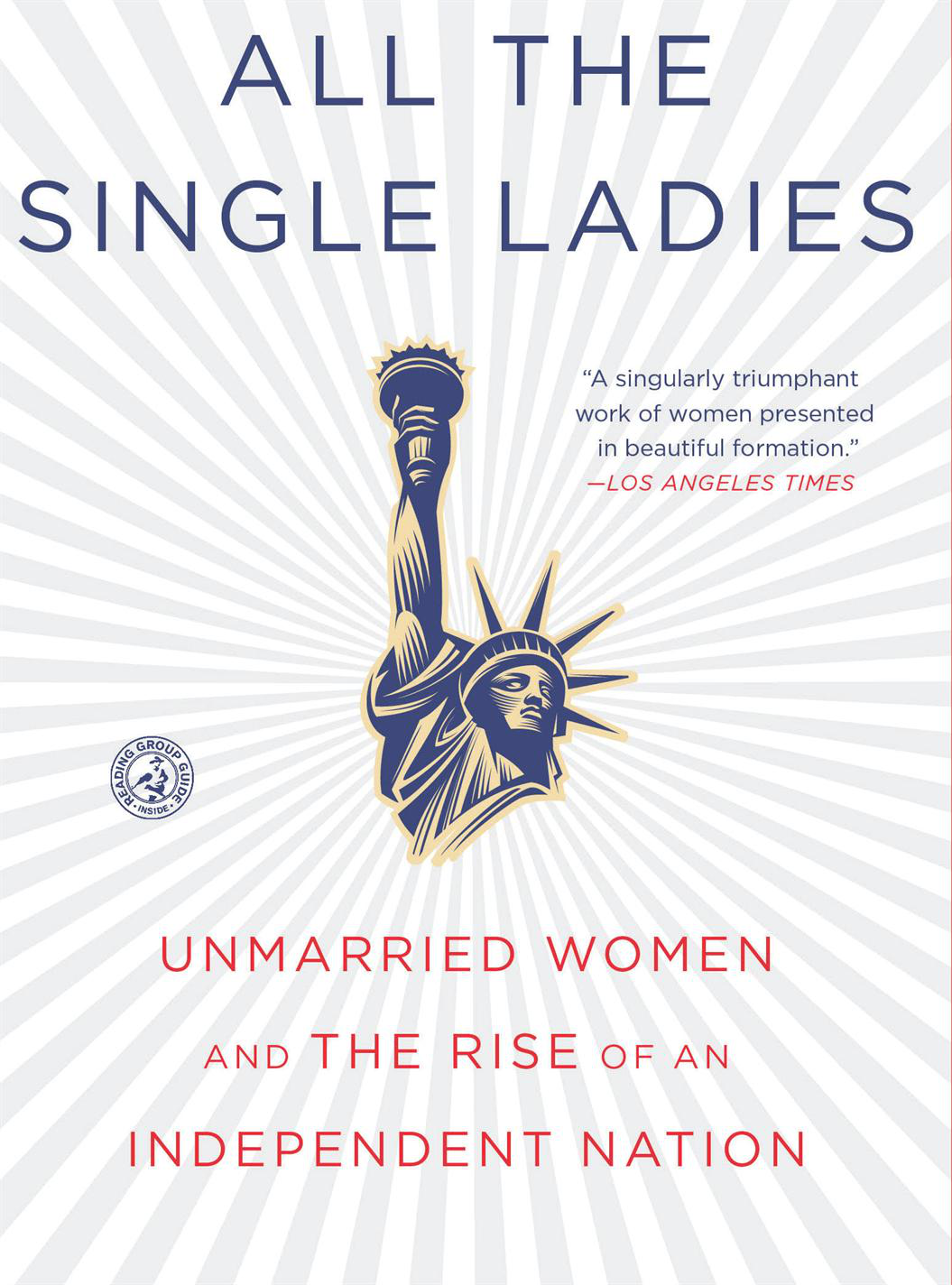
The way he backed away from me to let me in the row felt like I was being served my independence on a silver platter. He sat down after me and as I was situating myself in my seat I could feel him, side-eyeing me, either scared of me or thinking of something to say. Maybe both. I pulled out the book I’d be reading for the duration of the flight: Rebecca Traister’s All the Single Ladies. I noticed, out of my peripheral vision, that he was reading the cover of the book. He shifted to face forward, and didn’t talk to me once during the 6 hour flight.
This type of claimed autonomy is exactly what Traister writes about in her book: All the Single Ladies: Unmarried Women and the Rise of an Independent Nation. Although she started writing the novel as a journalistic endeavor, it evolved into an insightful and witty work of literary journalism about women. The book features the stories of women through and through. Traisterstrikes a balance between research, personal narrative, and insight from other women. The language is lofty yet precise, loaded with proof of the research she put into learning these histories.
She starts with a history of unmarried women, from shame to power and back. Describing the ebb and flow of a history that tried so hard to keep women as wives, Traister provides the necessary background to illustrate just how far society has allowed women to come. She discusses how a growing America influenced the role of women in society geographically, alluding to the great panic in the absence of young women to care for the needs of men that were busy building a country without them.
Women took on this prescribed responsibility, until feminist activists started to speak out for their value as independent individuals as early as the 1800’s. Traister provides relevant context to institutions begun by notable unmarried female figures we know today, such as Margaret Sanger, founder of Planned Parenthood. Traister grounds the book in a history packed with unmarried women discovering their power and sexuality, ultimately giving rise to what was called, “the new woman”.
Rebecca Traister goes on to discuss the importance of cities, arguing that cities are monumental in the liberation and success of single women. She paints a women’s relationship to her city as the best kind she can have; a relationship for herself. Staying loyal to the journalistic quality of the piece, Traister reports a thorough history of the space made for women in big cities like New York City by the establishment of female-only houses, which helped single women get on their feet upon migration.
Cities offered women the opportunity to socialize and be free of any preconceived expectations of them to find husbands and have children immediately. They had time, space, and resources to develop their careers and establish their own lives. Traister includes the personal stories of women who think back on their single years living in cities as the best years of their lives. Touching on the effect of neighborhoods, she argues that the support of neighborhoods allows for single motherhood. This is either an effect of the understood absence of men in NYC where the ratio of men to women is way off. Or the reverse: men’s understanding that they’re not necessary in a women’s, even a mother’s life.
My favorite chapter of the book is “Dangerous as Lucifer Matches: The Friendships of Women.” It’s a compelling and entertaining commentary on the power of friendships between unmarried women. Traister argues that marriage makes such powerful bonds impossible; in a way, your best friend is your partner in life. They’re “your person,” as she calls it. The acquisition of a husband pushes a best friend out of that spot. She tells emotional tales of best friends meeting, falling for each other, separating, reuniting, drifting apart, all due to men. She also provides a curious commentary about suspected homosexuality in female friendships, posing the question of what real partnership means; does the love have to be sexual?
In some ways, friendships between single women are better than the heterosexual marriages that society primes them to find. The faithfulness between a single woman and “her person” is unfal-tering. She adds an entertaining anecdote about Emily Brontë’s husband insisting on censoring her letters between her and her best friend Nell Nussey, out of horror at their unedited, honest enamor of each other.
Traister’s All the Single Ladies is an extensive and entertaining story of the ever-rising successful single woman. She provides a disclaimer in the Introduction that I thought would taint my trust in her as a reader. She is married. While fully impressed by and compelled to read all her research and stories, I couldn’t help but still question her authority to write on unmarried women if she herself is married. I decided to dissolve my doubt and give full ownership of the topic to her. She states that she started this work before she met her husband, and wrote similar stories during her singlehood. She lived her life as her own self first, and that is the point she makes as the most important thing a woman can do, so that the inception of marriage —should she ever decide to marry – doesn’t define her.
This book left me beaming with gratitude. As a woman who has always thought about having a boyfriend and spent hours of thought and discussion with friends as to why I don’t have one — hearing the importance and inherent power in singlehood liberated me to revel in my own existence. While I’m nowhere near marrying age, as dictated by current society, I closed this book with a sense of relief. This really is the time of the single lady.
Creative Credits
- Creative Credit
- Simon & Schuster Publicity
- Written by
- Zianna Milito
- Book author
- Rebecca Traister