
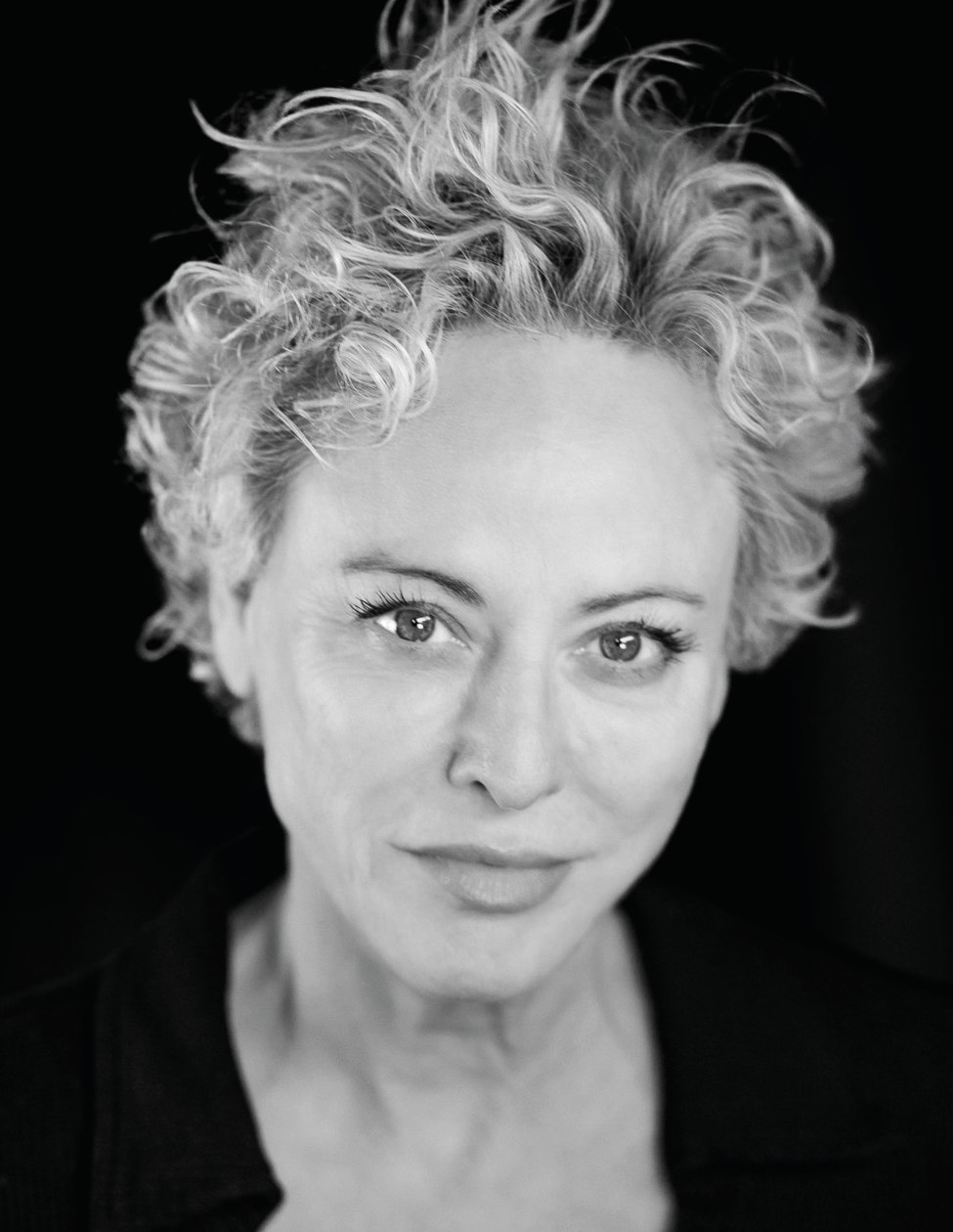
There’s a particular hush that falls after a film like Sheepdog—not the polite quiet of “good cinema,” but the charged stillness of recognition. People sit differently. They blink more slowly. They hesitate before standing, as if the act of moving on might be too fast for what they’ve just absorbed. Sheepdog doesn’t chase spectacle. It doesn’t treat trauma like a plot twist or veterans like shorthand. Instead, it lingers in the quieter aftermath—the part that doesn’t come with a uniform, a mission, or a clear next step. When Félix screened the film, the story landed less like a “message movie” and more like a mirror: two veterans—one young, one older—revealing the same experience in spite of the years and wars that separate their lives. Interesting to us was what the film refuses to do. It doesn’t lock onto one character and label everyone else “supporting.” It doesn’t argue that healing belongs to a single hero. Instead, it spreads the need across three people: the young veteran, the older Vietnam veteran, and the therapist who is, in her own way, trying to become who she needs to be. When we shared that observation with Virginia Madsen—who plays Dr. Elecia Knox, the clinician at the center of the film—she paused, then laughed softly, as if she’d been handed a key she hadn’t realized she was carrying. “That’s a really interesting comment because I never drew the comparison,” she told us. “I was thinking of the idea that we were all helping each other move forward… but the fact that they all have this one need is probably what draws us together in the story. That’s really interesting. I just never saw it that way.” That’s the first quiet truth Sheepdog insists upon: the story isn’t about one person getting better.
It’s about what happens when three lives collide at the same threshold—each of them needing a next phase, each of them terrified of what it will cost to cross into it.
The doctor isn’t framed as untouchable—she’s framed as human
In movies, doctors are often styled into certainty: successful, busy, sleek, emotionally contained. Their lives are a backdrop of competence. In Sheepdog, Dr. Knox has a second job. She works nights. She’s still in training. She’s not presented as a finished product. “That was a surprise to me when I read the script,” Madsen said. “What we see now, later in her life, is a doctor able to work by following her true calling.” Then she offered something audiences don’t often hear in films that deal with trauma: that the people who do this work are often under-resourced, and sometimes are doing it for reasons that have little to do with prestige. “It’s important to know that many people who do this kind of work are volunteers; they are doing this because they have this calling. If they are paid, it’s very, very little,” she said. The film reflects that reality without turning it into a lecture. It’s there in the background, like the hum of fluorescent lights at the end of a long day: this work is necessary, and yet the world rarely builds enough support around the people doing it. In the film, Dr. Knox is loosely based on a real person. “When writer/director/actor Stephen Grayhm first met her, she was a therapist in training at the VA,” Madsen explained. “Now, of course, fourteen years later, not being in the mainstream system allows her to explore therapies… that were then considered sort of controversial, like EMDR.” She described it with a kind of affection that felt grounded in the simple relief of seeing something depicted honestly: “That’s the flashing light thing that you see during one of their sessions… also low frequency sound therapy, tapping, and just having a closer relationship with her patient, that was otherwise frowned upon.” That word—frowned upon—does a lot of work. Because what Sheepdog is really circling isn’t just what trauma does to veterans. It’s what trauma does to the systems built to manage them. It’s the way “professionalism” can become a barricade. It’s the way distance can masquerade as ethics.
“Too personal” and the moral argument of distance
We asked Madsen about the criticism her character receives in the story—that she’s too close, too personal, too involved. In most films, that critique plays like a warning: boundaries are the price of credibility. In Sheepdog, it plays more like a question: how much distance is protection, and how much is avoidance?
“I learned from other caregivers and a couple of doctors that they are encouraged to keep a safe distance because if you get too involved you might get hurt,” she said. “Not physically, but if you get too involved, you might not have fair judgment.” It’s a precise distinction—one that respects the complexity of the work. She wasn’t romanticizing intimacy. She was describing the risk of being swallowed by someone else’s pain. “It’s a big point of debate with therapists as to how much do they share about their personal lives,” she continued. “This kind of work is really tough. And a lot of therapists that deal in trauma therapy just don’t stay on that job for very long because it takes so much out of them personally. It’s very, very hard, emotionally, to carry the weight of those kinds of stories.” The line lands like a confession: we ask clinicians to be present, but not too present; empathetic, but not too human; resilient, but never exhausted. Then we act surprised when the human cost shows.
The “angry veteran” myth—and the silence underneath it
Sheepdog dares to show anger without letting anger become the entire identity. That’s significant because the cultural script around veterans—especially Vietnam veterans—has long been flattened into caricature: volatile, haunted, “out of control.” The film includes that anger, but it refuses to let it be the only language. We asked Madsen about the way both veterans in the story are seen as “troubled,” and how those labels shift across generations. “I think you raise two separate ideas, which is really important to talk about,” she said. “The perception of soldiers, the perception of veterans… is that they’re angry, they’re out of control, they’re sometimes even thought of as not grateful.” Then she named the quieter reality inside that perception: the enforced silence. “One of the biggest problems they face when coming home is talking about how they feel; for them to even ask for help is discouraged,” she said. In one of the film’s most powerful moments, the older veteran—played by Vondie Curtis Hall—explodes at the younger man, insisting he doesn’t understand what he’s been through. It would be easy to interpret that scene as a hierarchy of suffering: the older man has endured longer, therefore his pain is deeper, therefore his anger is more “earned.” But Sheepdog doesn’t reward that kind of comparison. It suggests something more devastating: what they share isn’t the same war, but the same inability to speak about the war that followed them home.
“I think it’s an interesting story that could play out even if the movie was just on those two characters; they really do have so much in common,” Madsen said. “They’re both angry. They’ve both been through the war they were in and the war they’ve faced becoming a civilian again.” The phrase she returns to—becoming a civilian again—carries weight. It suggests that re-entry is not automatic. It’s not a switch. It’s a second transformation, and it’s often done alone. “The older one, carrying that weight for that long for that many years, because he too never got treatment for what was going on with him,” she said. “They’re being told, ‘you’re fine, you’re out of the war, you should just carry on, there’s nothing wrong with you.’ Think what that can do to a person who’s lived with that for decades.” And then she turned the lens back to the younger veteran, refusing the temptation to treat “fresh trauma” as somehow less complex. “The younger veteran is experiencing this same kind of trauma, the same kind of neglect. It’s fresh for both of them,” she said. “That’s what was really interesting to me.” That word again—interesting—but in her mouth it doesn’t mean casual. It means: this is the part we don’t talk about enough.
The gift no one expects: “a place to be”
Some films mistake healing for a grand gesture. Sheepdog chooses something smaller, and in doing so, more radical. The turning point isn’t a speech. It’s not a tidy breakthrough. It’s shelter. We told Madsen what felt so unique about the relationship between the two men: the older veteran is given the gift he needs most by the younger man—not advice, not validation, but a place where he doesn’t have to keep running. The younger veteran invites him to live in his house. It’s offered almost blindly, as if he doesn’t yet understand what he’s giving. “It was as if he didn’t really know what he was giving the man until at the end of the movie when they seem to understand each other,” we said. “That is what was beautiful about the story,” Madsen replied. It’s a small exchange in the film, but emotionally it lands as a thesis: sometimes the most profound form of care is simply making room.
What “Sheepdog” means—and who it applies to
Then there’s the title, which sounds simple until the film reveals its spine. “The title of the film ‘Sheepdog’ was one I’d never heard spoken about in military terms,” Madsen told us. “It has a specific source: it means to protect the herd and face the wolf.” In that definition, the film finds its metaphor—and expands it beyond the obvious. “And so in a way, my character is also a sheep dog in the film,” she said. “I’m learning and I’m helping to guide him and to protect him. And every person in the film does that for one another.” That’s the film’s quiet insistence again: protection is not a single role. It circulates. It shifts. The young man protects the older man without realizing it. The clinician protects them both, and is also learning how to protect herself. Even the act of receiving care becomes, in its own way, a kind of protection—because it interrupts the loneliness that keeps people stuck.
Why she trusted Stephen Grayhm—“the Chicago way”
Madsen’s performance as Dr. Knox has the kind of gravity that doesn’t feel performative. It feels lived-in. Part of that, she told us, came from the way she approached the project before she ever stepped on set: with suspicion, and with standards. “When I first met the writer, Stephen, he wanted to give me his script in person, because he really cared,” she said. “There was something so sincere about him. So I really didn’t know how somebody so young could know anything about veterans… or how true were these stories.” Then she admitted she challenged him—hard. “I kind of put him through the wringer,” she said, describing a long phone conversation where she tested not just his passion, but his preparedness. “Look man, I’ve been around and I know how these things go,” she said she told him. “Somebody can be very passionate about their project. It doesn’t mean they’re going to make a good film.” Her skepticism wasn’t cynical—it was protective. And then she explained why. “For something that I had a direct personal connection with myself; this was really risky for me,” she said. “In my family, my nephew Hudson was in the service and died by suicide. And so I was looking for a project that I could do to honor his memory, to honor the family, but I didn’t want that to be used for somebody else’s benefit.” This is where the interview stops being promotional and becomes something else: a decision made with grief at the table. “So I had to make sure that this guy—to put it in a Chicago way—I had to make sure this guy ‘was on the level,’” she said. “And so I spent quite a bit of time talking to him and learning his story.”
What ultimately convinced her was not a pitch deck or a promise. It was the time he spent earning the trust of the very community he was portraying. “He wrote this film with his friend Matt Dallas,” she said, “who is also in the film and also spent this incredible long journey with Stephen working with veterans.” Then she gave the simplest metric of credibility: “It says a lot about those two men that they earned the trust of… the veterans themselves… But those veterans let Stephen in and I thought, if they trust him, that should be enough for me.” She also spoke with the blunt pragmatism of someone who has lived through projects that collapse: “Even if a script is good, if it’s not got some sort of organization… if it’s not financed yet… and the project doesn’t get off the ground… it can be heartbreaking,” she said. “I have to wait till they get it started and that’s when I can jump on board.” In other words: sincerity is not enough. There must be structure. There must be follow-through. There must be evidence.
Watching it alone—and the moment veterans said, “you got it right”
One of the most honest parts of our conversation was Madsen describing what happens after filming ends—when actors relinquish control and hope the finished work honors what they believed they were making. “One of the hardest parts about making a film, if you’re the actor, is that when my job is done, I leave,” she said. “I’m not an editor. I’m not the producer. I’m not the boss… I don’t know what they’re going to do with my work.” For this film, that uncertainty carried an extra weight. “The stakes were really high for me because it involved my family,” she said. So she asked for a private viewing first. “I asked Stephen if he would trust me to just watch the film by myself with my husband,” she explained. “I told him, I can’t watch it with you because you’re going to watch me watching it.” She didn’t want an audience either—not yet. “I didn’t want to watch it with an audience because for this film the stakes were really high for me,” she said again, as if repetition was the only honest way to convey what it meant. When she finally watched it, her relief sounded physical. “When I watched the film; it was beautiful,” she said. “They didn’t ruin it. It was everything that I hoped it could be.” She confessed she didn’t call Grayhm immediately afterward. “I probably scared him because I didn’t call him right away because I couldn’t talk for a while after I saw it,” she said. “It was so, so moving.”
Then came the screening that mattered most: veterans. “The next time I saw it, I saw it with an audience of veterans,” she said. “And it’s probably the most rewarding… experience I’ve had since I was very, very young.” She described the dread that preceded that screening—the fear that the people being portrayed would feel misrepresented, exploited, simplified. “Would they like it? How would the veterans react to somebody telling their story?” she said. The answer arrived in a phrase that felt less like praise than permission. “When I knew that the film had their approval, that was more than I hoped for,” she said. And then, in a line that might be the quietest victory the film could ask for, she told us what she kept hearing: “That first time has been repeated; and almost every single time that I’ve been in a screening, what I hear is ‘you got it right.’”
What Sheepdog understands—without announcing it
On paper, Sheepdog is a drama about a veteran court-ordered into treatment, a therapist learning the boundaries of care, and an older Vietnam veteran whose own untreated trauma collides with the present. In practice, it’s arguing something gentler and more radical: healing is not an individual performance. It’s relational. It is held, transferred, resisted, and, sometimes, finally received. The film doesn’t pretend that pain disappears. It doesn’t package recovery as a clean ascent. It shows the mess: anger that protects grief, silence that becomes identity, care that risks collapse. And then it shows something else—something the culture rarely offers veterans and caregivers alike. A place to be. A way forward that doesn’t require pretending the past didn’t happen. A sheepdog, facing the wolf—not as a hero, but as a role passed hand to hand, person to person, until someone finally stops running long enough to be found.
Creative Credits
- Written by
- Elaine Madsen
- Senior Editor
- Emily Chu
- Photography
- Nick Holmes