
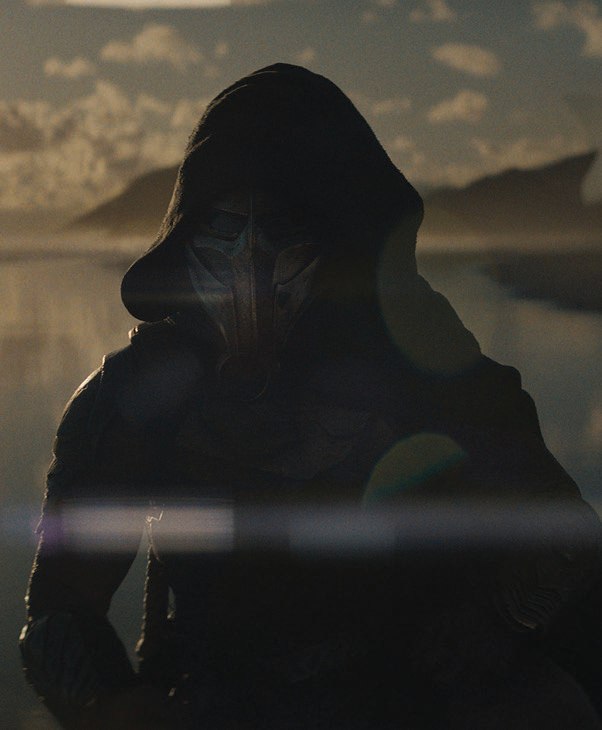
The hook
You go into Predator: Badlands expecting the usual pleasures: shimmered heat vision, a cruel little click, bodies turned into punctuation. What you don’t expect is the film’s first twist—simple, nasty, and immediately addictive. You’re not scared of the Predator. You’re scared for him.
The premise, sharpened
Dek (Dimitrius Schuster-Koloamatangi) is young, lethal, and exiled from his clan. That one choice—making the Predator an outcast instead of an apex arrival—changes everything. The hunt stops being a flex. It becomes an audition. The monster isn’t collecting trophies; he’s collecting proof that he deserves to exist.
It’s a franchise move that shouldn’t work. It works because Trachtenberg doesn’t sentimentalize the creature. He gives him context, not a halo.
Elle Fanning: the film’s spark
Then Elle Fanning shows up as Thia, a synthetic with a mouth, a mind, and just enough damage to make every line feel like it has stakes. She’s not the helpless human. She’s the negotiator. The witness. The one who knows a system will smile while it discards you.Fanning plays Thia like someone who learned to survive by staying sharp. The humor has edges. The vulnerability has rules. When she and Dek lock into uneasy partnership, it doesn’t read like “unlikely friends.” It reads like two castoffs recognizing each other and refusing, for one more mile, to be thrown away.
The Badlands are the real villain
The planet isn’t just remote; it’s rude. Jagged rock, thin light, silence that feels like it’s listening. Badlands doesn’t luxuriate in worldbuilding trivia—it gives you texture and threat, then lets your nerves do the math. Every time the characters find a moment of safety, the film takes it back. Not with a jump scare. With policy. The Badlands don’t believe in rest.
Action that makes sense
Trachtenberg stages action the way good directors do: you can tell where everyone is, what they want, and why the next second matters. The PG-13 rating doesn’t turn the film soft. It turns it efficient. Instead of drowning you in gore, the movie uses speed, sound, and consequence. You feel impact. You feel loss. You feel the cost of every decision. And because it doesn’t show you everything, your brain helpfully supplies the worst version.
The secret theme: disposability
Under the armor and the sci‐fi grit, Badlands is about being disp
Dek is disposable to his clan. Thia is disposable to the machine that made her. The planet treats everyone as disposable.
The movie’s best trick is that it doesn’t stop at despair. It offers a counter-strategy: connection. Not romance. Not sentimentality. Connection as survival tech. As the one thing that interrupts th algorithm of being used up.
The ending doesn’t pamper you
Badlands doesn’t hand out easy catharsis. It understands the real isn’t the hunt. It’s what happens after the hunt—when you have to to the same structure that decided you didn’t count.
The film leaves you with an uncomfortable truth: proving yours the same as being accepted. Acceptance isn’t the same as safet “home” can be the most hostile planet of all.
Verdict
Predator: Badlands is a franchise entry with a spine. It keeps th menace, adds intimacy, and swaps trophy culture for something h the need to matter.
Schuster-Koloamatangi makes Dek ferocious without turnin cartoonish. Fanning makes Thia electric without turning he Trachtenberg makes the whole thing feel like a point of view content drop.
You’ll come for the hunt. You’ll stay for the ache.
posable. a he danger o return elf isn’t ty. And e series’ harsher: ng him r cute. w, not a
Creative Credits
- Written by
- Clara Voss
- Images courtesy of
- Predator: Badlands / The Walt Disney Studios UK