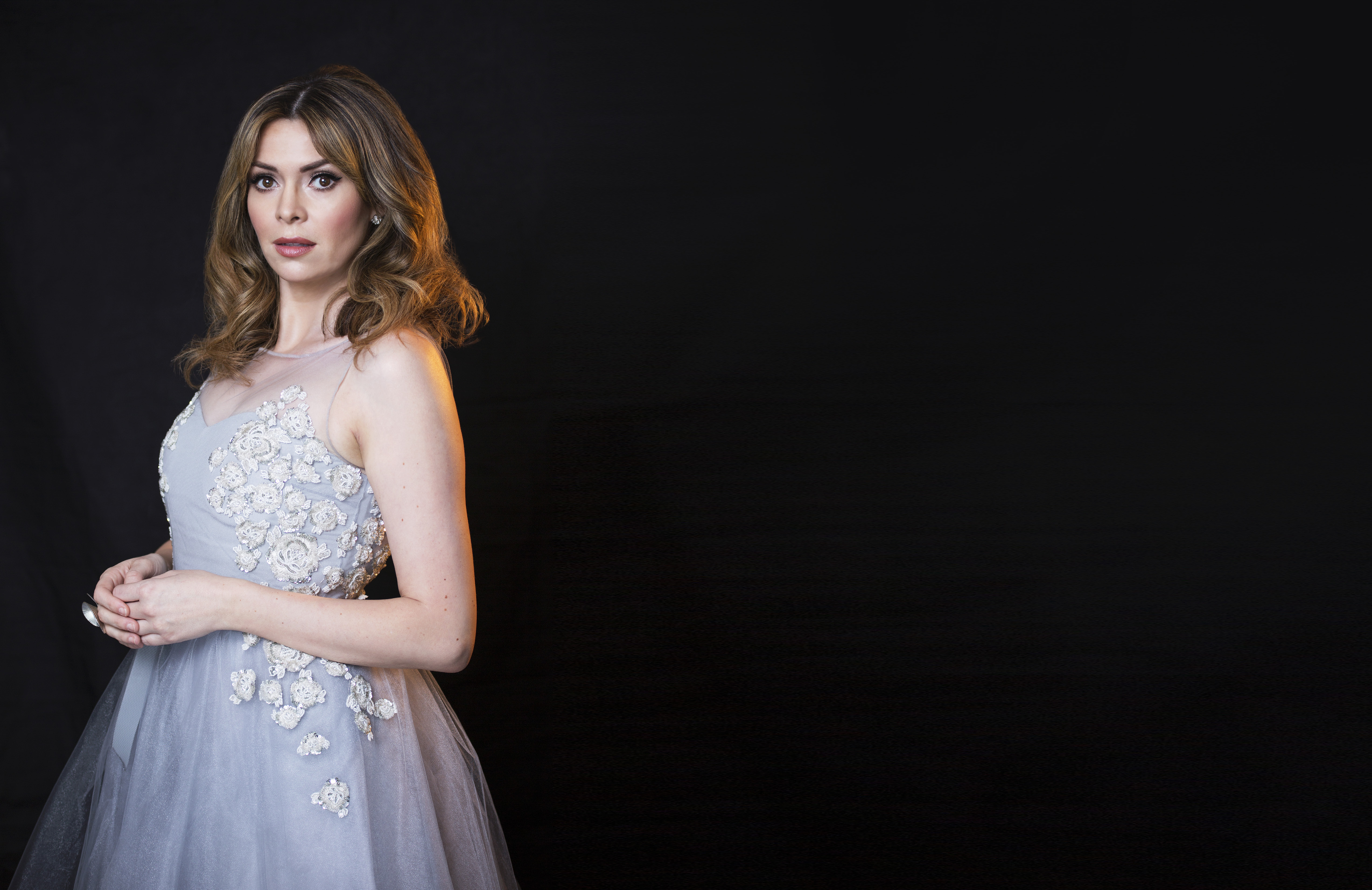
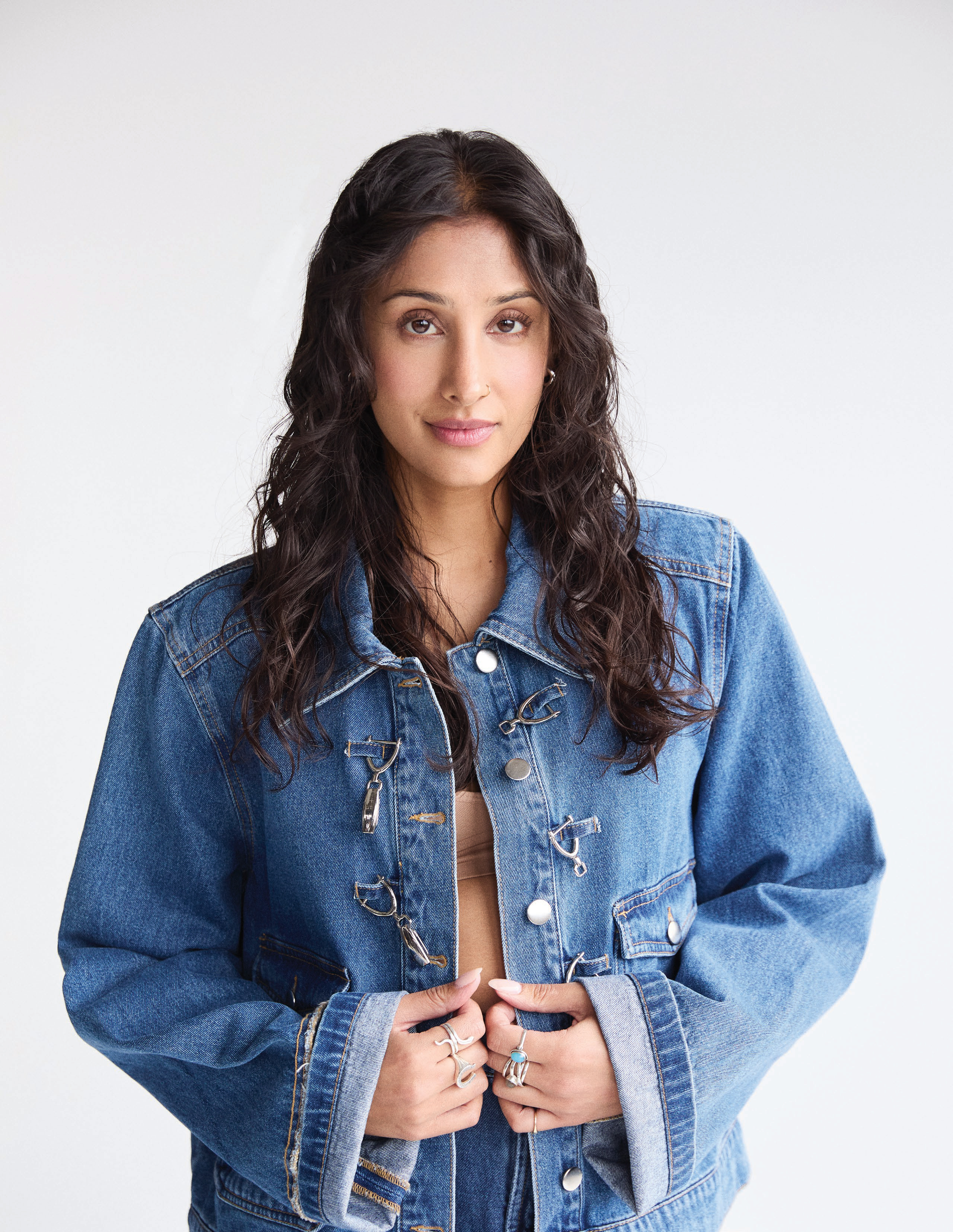
From gritty rebellion in Riot Women to laugh-out-loud chaos in Daddy Issues, BAFTA-nominated Taj Atwal is proving she can command drama, comedy, and everything in between.
Taj Atwal has always had range—Line of Duty fans know her as PC Tatleen, Hullraisers showcased her as a grounded lead, and Hollywood tapped her for action thrillers opposite Liam Neeson and Michael Keaton. But 2025 is shaping up to be the year her range becomes undeniable.
First, she explodes onto screen as Nisha Lal in Riot Women, Sally Wainwright’s hotly anticipated new BBC drama, which premiered October 12 on BBC One and iPlayer. It’s a raw, unapologetic series about working-class women rewriting their lives through music and rebellion, and Atwal’s performance has already been called “fiery” and “full-blooded.” The Independent praised the show as “a powerful feminist anthem about invisibility, ageing, and reclaiming voice,” while Radio Times called it “gloriously defiant.”
Then, almost without missing a beat, she slips back into comedy for Season 2 of Daddy Issues, BBC Three’s biggest comedy hit since its 2022 relaunch, where she’s Cherry—the messy, chaotic, irresistibly lovable best friend with timing that can make or break a scene. It’s a one-two punch of drama and comedy that most actors would kill for in a single year. For Taj Atwal, it’s just proof that she’s done being typecast. Whether she’s carrying a baton in Line of Duty, a guitar in Riot Women, or the wildest punchline in Daddy Issues, Atwal is showing us that versatility isn’t just about range—it’s about claiming every lane.
Band Practice and Breaking Ground
When Atwal talks about her first day on Riot Women, she laughs. “Our first day together was actually band practice,” she recalls. “Seeing all the ladies with their instruments was so inspiring. I was especially excited to meet Sally. She had so generously offered me the role before we’d even met in person, after seeing my work, so I was very keen not to piss her off and to live up to her expectations! She turned out to be everything I’d hoped for and working with her is definitely one to tick off the bucket list.”
It’s an origin story that feels fitting. Atwal’s Riot Women character, Nisha Lal, is a police officer with a moral compass so sharp it sometimes cuts both ways. “Nisha’s got real heart,” she says. “She deeply cares about justice and that’s what drives her to be a police officer in the first place. Her fire comes from a genuine care about humanity but that same passion often leaves her exposed and vulnerable. You could say she cares to a fault, but I hope audiences see that it all stems from her strong moral compass and her belief in doing the right thing, no matter the cost.”
That integrity—rooted in empathy, expressed as fire—is what anchors Riot Women. When asked if there was a particular scene that felt cathartic to perform, Atwal doesn’t hesitate. “Our big final showstopper! I can’t say too much, but wow… that was an experience I’ll never forget. It was powerful, emotional, and incredible to be part of.”
Switching Frequencies
If Riot Women burns hot with anger and conviction, Daddy Issues thrives on timing and chaos. Atwal plays Cherry, the free-spirited best friend to Aimee Lou Wood’s Gemma, navigating motherhood and friendship with reckless charm.
“There’s actually a lot of humour throughout Riot Women and my character starts off with that tone so it was a nice transition into the storyline,” she notes. “The biggest difference between those shows is how I brought the character to life. Sally is very precise about beats, punctuation & honoring the line exactly how it is written; and rightly so, she’s a genius with her work. Whereas Daddy Issues there is the opportunity to flesh out your character with improvisation.”
That balance—between precision and improvisation, control and chaos—is what makes Atwal so watchable. “We see Cherry and Gemma’s friendship continue to grow but also face its fair share of fallouts! For all of Cherry’s bravado, there’s a real vulnerability underneath her desire for fun. A lot of that comes from her being a single mum and feeling quite alone at times, especially when Gemma gets caught up in her own problems.” She pauses before adding: “The process is largely the same. It’s all about finding truth in the character but I do adapt to each director’s style and way of working. Every project has its own rhythm so it’s about tuning into that while staying grounded in the character’s reality.”
Expanding the Frame
Over the last decade, Atwal has built a career defined by range— by the sheer breadth of women she’s portrayed. From police dramas (Line of Duty) to domestic comedies (Hullraisers), and now the cinematic ambition of Riot Women, she’s consistently sidestepped predictability.
When asked which role stretched her the most, she points not to a British project but to her Hollywood debut in Memory, starring opposite Liam Neeson and Guy Pearce. “Definitely Linda Amistead in Memory,” she says. “She’s from Dallas and works for the FBI which is a very male-dominated environment while dealing with a really messy case. Getting to sink my teeth into a character like that, with such a different background and energy, was a real stretch in the best way. It felt expansive.”
That expansiveness also defines how she chooses new work. “Sometimes a script doesn’t feel completely solid on the first read but there’s a spark and if the team behind it are creatives I really want to work with, I’ll often choose that route. I trust that, collectively, we can bring the story to life. Or usually it’s a character I just have to play. I’ve had a run of playing some really empowering, badass women recently so any project with a woman like that in the mix definitely catches my attention.”
Saying No to Stereotypes
In an industry that often pigeonholes, Atwal has become more deliberate about the work she takes on. “I’ve been saying no a lot more recently,” she admits. “There has been a spate of South Asian stories that center on the protagonist getting married and all the family drama surrounding that. To me, this feels like a step backward. We have so many more interesting stories to tell as South Asians and our lives don’t revolve around just marriage. It feels boring to regurgitate the same narrative.”
It’s a candid assessment—and one that aligns with the cultural commentary woven through Riot Women. “I hope so!” she says when asked if British television is finally embracing female-led, working-class stories. “Women, whether working class or not, are so multi-faceted and it’s those stories I want to tell. Are we starting to see more authentic, female working-class centered stories? I think there’s a slow but positive shift happening. And being offered interesting roles as a working-class actress? That’s definitely something we need more of!”
Atwal has long resisted being reduced to labels—whether cultural, class, or otherwise. “My co-star Leah Harvey said something that really resonates with me: that we always seem to have to justify playing characters who challenge stereotypes,” she says. “I completely agree. We don’t stereotype ourselves; we’re just playing characters and telling stories that reflect humanity. It’s everyone else who tries to put us in a box and then acts like it’s radical when we’re simply portraying real people.”
Reset and Reclaim
For someone with such momentum, Atwal is intentional about her resets. “I completely immerse myself back into my friendship group: party, sleep, read, gym… basically anything other than acting! It’s my way of resetting and coming back fresh for the next project.”
That self-awareness is part of what keeps her work grounded. While many actors chase the next project, Atwal also writes. She’s currently developing a film script—partly autobiographical, deeply personal, and unmistakably hers. “One of the scripts I’m working on is semi-autobiographical so it’s deeply personal to me,” she explains. “At the same time, I’m writing it with many other young adults in mind who may have shared similar experiences to show them they’re not alone. I think while certain elements of a story are uniquely personal, stories that reflect humanity can resonate with many of us. The challenge is that unconscious bias can shape how people tell diverse stories, often resulting in narratives that are unintentionally narrow or one-sided.”
Art Imitating Life
As Riot Women airs weekly, Atwal’s storyline continues to resonate. “At the time of filming, my storyline was reflecting – and still does reflect – some really intense moments happening in the world,” she says. “The experiences my character was going through were unfolding right outside on the streets and it was overwhelming at times. I couldn’t escape from it either, so it really felt like art imitating life. That intensity gave me the conviction to portray Nisha’s story as authentically as possible. That’s why Sally is such a genius – she gives every character and every moment the weight it deserves, balancing all the big life moments perfectly. I hope audiences take away hope from this story.”
Returning to Cherry
Meanwhile, on the comedy front, Atwal is thrilled to revisit Cherry in Daddy Issues’ second season. “It’s just as fun as the first time around!” she says. “I know Cherry so well now which meant I could add more detail and depth to her life. Danielle, our brilliant writer, gave us the freedom to really ‘own’ our characters and make suggestions that felt true to them.”
That creative freedom has paid off—Daddy Issues averaged 1.6 million viewers across its first season’s 28-day window, making it BBC Three’s biggest comedy launch since its relaunch in 2022. Season 2 picks up with new family dynamics and a few surprise twists that promise to expand the emotional core beneath the laughs.
Braver Roles Ahead
With two BAFTA nominations already under her belt, Atwal is using that recognition not as validation, but as propulsion. “I still put in the same amount of work to secure or create a role but the recognition has given me an internal courage to go for braver, more challenging roles,” she says. “It’s also made me more confident saying ‘no’ to roles that don’t align with where I want my career to go — trusting that those no’s will lead me to even better yes’s!”
The Last Word
In many ways, Riot Women and Daddy Issues mirror the two poles of Taj Atwal’s artistry: one fierce and defiant, the other chaotic and disarmingly tender. Both reveal a performer in full command of her range, unafraid to lead, to challenge, to risk. Her characters—whether strumming guitars in Yorkshire or spinning jokes on BBC Three—carry an unmistakable pulse: conviction, humour, and heart. And as Atwal herself might say, she’s not asking for permission. She’s already rewriting the script.
Rebel. Comedian. Storyteller. In a year defined by contrast, Taj Atwal isn’t playing roles—she’s defining them.
Creative Credits
- Written by
- Juliette Roth
- Photography
- David Reiss
- Retouching
- Brianna Kish
- Styling
- Harriet Nicholson
- Hair Stylist
- Sandra Hahnel
- Makeup Artist
- Lauren Griffin