Words Juliette Roth
CULTURE / CINEMA · FALL 2025
For decades, the Alien franchise whispered one half of a name: Weyland. The other half—Yutani—was left to fan theories, footnotes, and shadows. Until now. In Alien: Earth, Sandra Yi Sencindiver steps into a role no one has ever played before, giving a face, a voice, and a pulse to the woman who will one day anchor one of science fiction’s most infamous corporations.
It is a moment that feels larger than one show, or one character. Sencindiver has built her career across continents and genres—commanding armies as Lady Amalisa in The Wheel of Time, scheming inside empires in Foundation, and finding lighter notes of wit and warmth in Netflix’s Geek Girl. Each turn has stretched her range, but none carry the weight of inventing a figure that’s been myth for nearly half a century.
And yet, Sencindiver is no stranger to rewriting the script. In Denmark, she co-founded a campaign that forced a reckoning on representation in film and television, sparking conversations that reached the highest levels of government. In Hollywood, she has turned that same insistence into choice: the roles she claims, the ones she refuses, and the worlds she is now creating behind the camera.
Stepping into Yutani is both a risk and a coronation—the kind of leap that marks a career. But as with every role she’s taken, Sandra Yi Sencindiver isn’t asking for permission. She’s deciding how the future looks, both on screen and off.
Entering the Legacy of Yutani
When asked what it felt like to step into the long-whispered name, Sandra admits she didn’t initially understand the full weight. As a child, she had been an Alien fan, rewatching the films endlessly. The magnitude only sank in when she joined the cast and crew in Bangkok. A producer shared how long they had searched for the right fit, and other cast members responded with awe: “You’re playing the Yutani.”
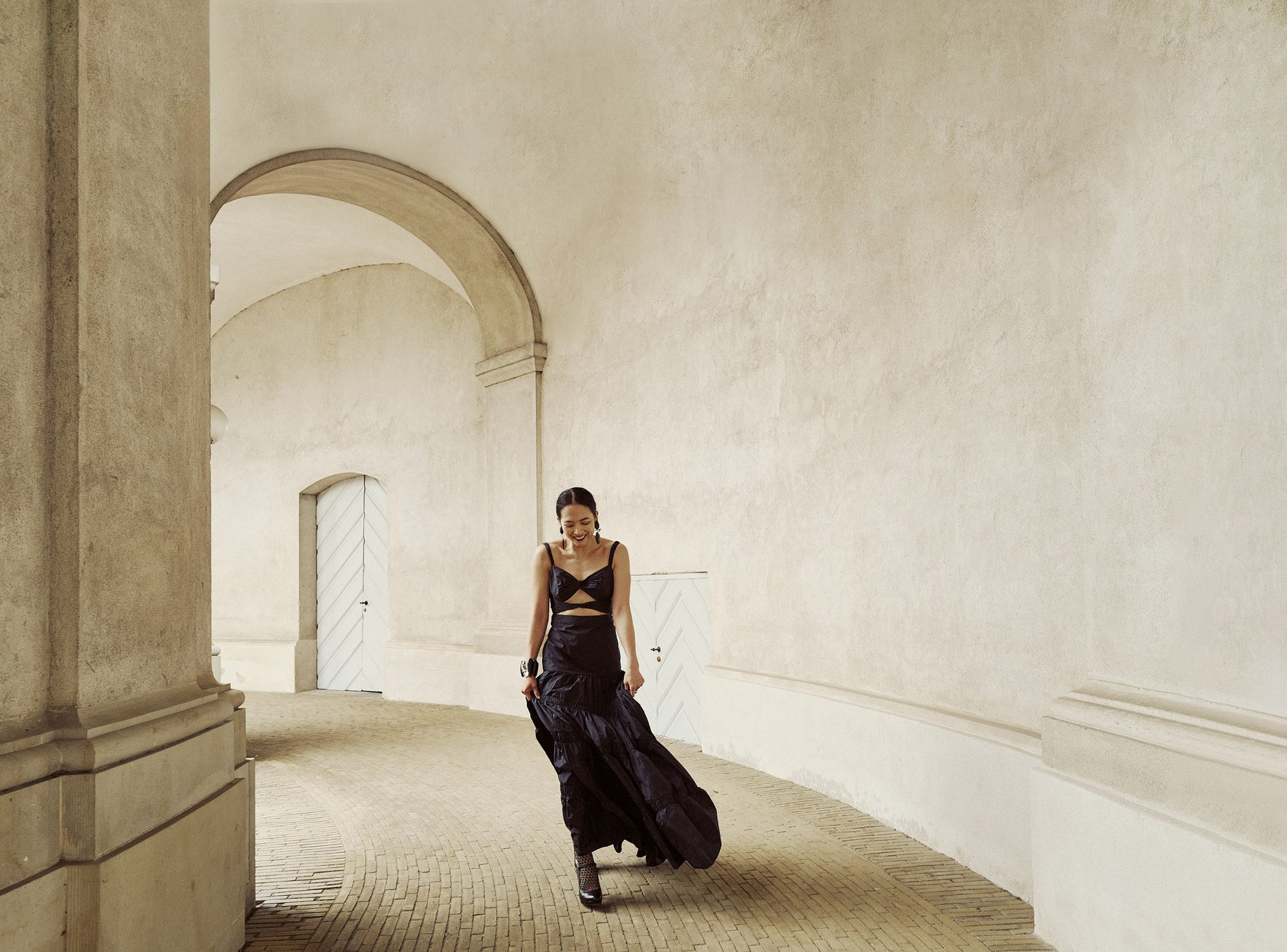
Rather than fear the expectations, Sandra embraced the freedom of uncharted territory. Fans had speculated about the character for over forty years, but without an established on-screen version, there was no template to copy. “I didn’t want to play a cookie-cutter ‘power woman in a suit’ with big boss energy,” she explains. Instead, she sought strength that resisted stereotypes of male authority. With the guidance of costume designer Suttirat Anne Larlarb, who emphasized that Yutani “doesn’t dress to please anyone but herself,” Sandra carried the character as an independent force.
Building a Generational Myth
Episodes 5 and 6 mark Yutani’s pivotal moments. Sandra credits Noah Hawley and his team for the narrative choices, but she recognizes how they frame Yutani’s role in the wider mythology. Episode 5 reveals that her grandmother began the mission to retrieve alien specimens, situating Yutani within a generational chain of power. Episode 6 expands further, mapping systems of wealth and governance.
Sandra relishes these developments, not just as an actor but as a fan of world-building. “Fans have been teased for years about how this universe evolved, and here you really get a taste of it,” she says. In these episodes, Yutani becomes more than a corporate figure—she becomes history itself. The clash with Boy K, embodying opportunism against her entrenched authority, dramatizes the struggle between old and new orders.
Lessons from Past Roles
Sandra’s journey to Alien: Earth was shaped by roles in The Wheel of Time and Foundation. Both involved women underestimated until they revealed their strength. Yutani, however, begins from another place: she has nothing to prove. “She just is,” Sandra observes. Large-scale productions gave her the stamina to handle the magnitude of Alien. “Without them, stepping into Alien might have felt overwhelming,” she reflects.
At the same time, her lighter turn in Geek Girl offered balance. Working with younger cast members, she took on a nurturing role, ensuring new actors felt welcomed. The freedom given by director Declan and showrunner Zoë encouraged her to shape scenes collaboratively. Fans, she notes, bring just as much passion, though with “a little less blood.”
Expanding Range Through Comedy
One of Sandra’s most surprising roles was Yuji Lee in Geek Girl. Known for her serious approach, she discovered her own comic timing. “At acting school I was the least funny actor in my class,” she recalls. Yuji’s deadpan delivery revealed a new dimension in her range: humor born of seriousness.
Crossing Cultures and Scales
Transitioning from Danish sets to Hollywood-scale productions brought moments of shock. The scale, the distance from directors and cinematographers, and the sheer number of crew members created an entirely different environment. In Denmark, she was accustomed to intimate collaboration; on American productions, she often found herself one of hundreds on a soundstage. Despite the grandeur, she retained humility, even amusing costume assistants by always hanging her wardrobe neatly—habits from her theater background.
Saying No and Knowing Worth
Sandra’s career has been defined not only by roles accepted but by roles rejected. She refused stereotypical portrayals of women of Asian descent, even at cost to her career. “Yes—and it cost me, but it also taught me to know my worth,” she says. At first, she declined silently, later she explained her reasons to push the industry toward change.
This commitment to representation echoes her activism in Denmark. Co-founding a campaign to challenge casting bias, she pressed for institutional awareness. Carrying that fire into international projects, she seeks to improve both art and environment through candid communication.
Protecting Identities
Sandra holds Korean and Danish identities simultaneously. Rather than viewing them as contradictions, she regards them as complementary powers. “Sometimes, not being ‘fully’ Danish, Korean, or American has excluded me,” she acknowledges. But she reframes it: “I’ve come to see that as my superpower. If I’m the right fit, I’m the only fit.”
She insists that global storytelling cannot exist without true global voices. “Studies show diversity strengthens the art and broadens appeal,” she notes, arguing that Hollywood must do more than market inclusivity—it must live it.
Shaping Agency with Age
Contrary to expectations, Sandra’s career flourished after forty. Early roles often reduced her to voiceless victims, but maturity has brought characters of agency and power. “Maybe it’s not me changing into those roles, but the industry finally creating them,” she reflects. International recognition hasn’t shifted Denmark’s perception entirely, but she has found gratitude in the opportunities abroad and the activism at home.
Creating Stories of Her Own
Sandra’s authorship extends beyond acting. She has written and directed award-winning shorts and is developing a project rooted in themes of love, family, and generational miscommunication. “Honestly, I’m still not sure I am mature enough,” she confesses, “but I do know I’m brave enough to try.”
Claiming Space in the Alien Universe
When asked about her hopes for the Alien legacy, Sandra looks to Sigourney Weaver’s Ellen Ripley as inspiration. Ripley became the franchise’s definitive heroine; Sandra sees Yutani differently but just as enduring. “I’d happily go down in history as a major corporate baddie,” she says with pride. To secure that legacy, though, she emphasizes the need for more seasons: time and space to allow Yutani to fully unfold.
The Alien franchise has always been about survival: who endures, who adapts, who rewrites the rules in the dark. By stepping into Yutani, Sandra Yi Sencindiver is doing more than giving a name a face. She is pulling the future into focus—one choice, one role, one world at a time. And as her career expands from acting to directing, from Denmark to Hollywood, she’s proving that power isn’t just written into the script. It’s claimed.
Creative Credits
- Written by
- Juliette Roth
- Photography
- HEIN
- Retouching
- Brianna Kish