Words Marshelle Sanders
PEOPLE / FILM · WINTER 2026
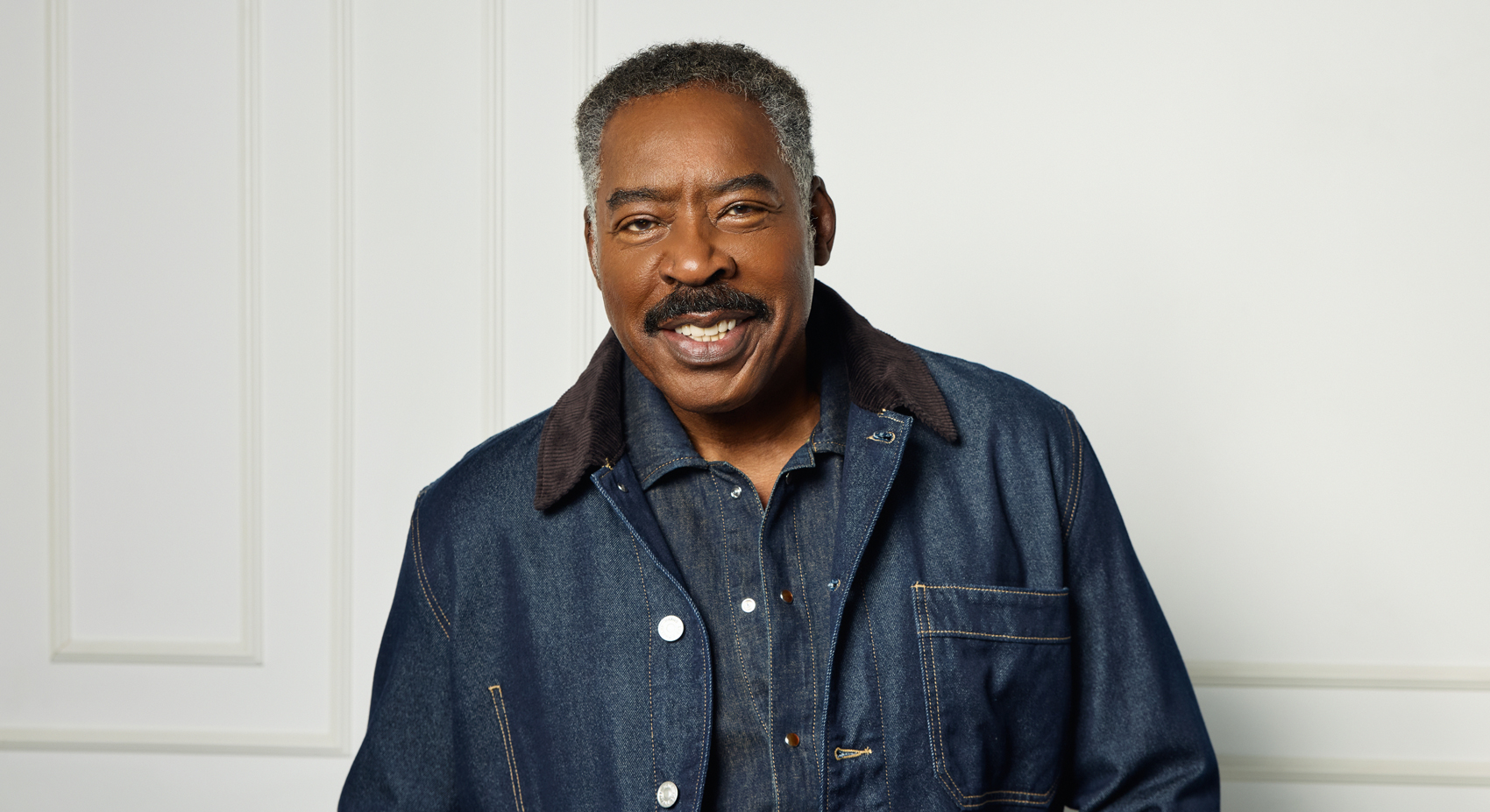
Not long ago, Ernie Hudson and his wife were walking to dinner when a passing driver slammed on the brakes, leaned out and shouted, “Ernie Hudson! You’re a legend!” Hudson later told People he took the compliment with a laugh: “Which means you’re old, I think.”
The record suggests something more precise. For more than five decades, American film and television have quietly cast Hudson as the person you look to when things get complicated: the warden on Oz, the reverend on Boston Blue, the patriarch of the Duncan family in The Family Business, the Ghostbuster who shows up late and ends up steadying the team. Born in 1945 in Benton Harbor, Michigan, he is now 80 and has been acting since the early 1970s, with Winston Zeddemore—introduced in 1984’s Ghostbusters and returning in sequels including 2024’s Ghostbusters: Frozen Empire—as the role that made his face instantly legible across generations.
Right now, that “grown-up in the frame” throughline runs straight through his current work. On CBS’s Boston Blue, a Blue Bloods spinoff, he plays Reverend Edwin Peters, a Baptist pastor and patriarch in a Boston law-and-order family that includes a detective, a district attorney, and a superintendent of detectives. On BET+, he is Lavernius “L.C.” Duncan, CEO of Duncan Motors and head of the Duncan family in Carl Weber’s The Family Business, where a luxury car dealership fronts a criminal empire. And in animation, he is stepping into Toy Story 5 as the voice of Combat Carl, taking over the role from the late Carl Weathers in a franchise that has shaped childhoods for decades.
Hudson’s audience now spans generations inside his own family. In that same People interview, he said he doesn’t usually revisit his past work, but the last time he watched the original Ghostbusters was “probably” with his three great-grandkids—and that he still sings the Ray Parker Jr. theme song. For an actor whose career has never really stopped, it’s an unusually neat summary of the long game he’s been playing: one character that refuses to fade, a slate of new roles on network TV, streaming, and in theaters, and a living room full of children discovering him for the first time.
I always saw myself as being okay.
Ask Hudson to choose the opening image of this story and he goes back to a church bench in Benton Harbor.
“I’d say sitting on the front pew of the church with my grandmother’s Bible,” he says. “And I have on my one suit that I went to church in… when I think of my childhood, that’s what I see mostly.”
He grew up, as he’s said many times, “with a lot of love but not a lot of money.” But when you frame his childhood in terms of escape—of imagination as a “ticket out”—he gently shifts the lens.
“I never… I don’t know if I ever realized that,” he says. “I just always believed that it wasn’t a matter so much of getting out, [but] a matter of walking clear. You know, there’s the Lord’s Prayer—‘though I walk through the valley of the shadow of death.’ So I always felt that I was okay. I just never imagined being trapped in a bunch of insanity. So my imagination was always… I guess I’ve always seen myself as being okay.”
The point, even back then, was not to run but to move through—head up, eyes forward.
Along the way, a few people outside his family saw something in him that he hadn’t yet learned to name.
“The first acting class I took in college, I had a couple of instructors who really… somehow I was in a class with a bunch of other people, but they saw something different in me,” he recalls. “They had faith in me. And sometimes I just had faith for myself. I didn’t question my right to be there.”
He remembers their names like a roll call:
“A guy named David Regal, another named Earl Smith,” he says. “They were with the Black theater program. They were always very supportive and encouraging.”
A short stint in the Marines, a long road back
Before theater, before film, there was the United States Marine Corps—briefly.
“I joined the Marines. I was only there for, I think, ten weeks,” Hudson says. “I was discharged—medical discharge. I had asthma.”
It was, he notes, “at the very beginning of the Vietnam War, which I didn’t know about when I signed up. I found out about it after I got there.”
The experience left him with a few sharp impressions.
“I don’t know if I drew a lot from the Marine Corps, other than there are some very scary people on the planet that you would rather stay away from,” he says. “I thought it was a clear path. And then once that was over, it just made me aware that I had to find another way to move forward.”
“Another way” did not arrive with a trumpet fanfare. It arrived with responsibility.
“When I finished high school, I joined the Marines,” he explains. “I was there for most of the summer and then I was discharged, and I was back home in the projects. And I married a girl who was having some difficulties at home and suddenly I found myself married. And then she got pregnant and I’m expecting a child. I’m in the middle of it and I felt like my whole life was suddenly over.”
He laughs a little when he says it, but the weight is there. The exit ramp was education.
“I eventually got into college in Detroit, Wayne State University, and it was there that I discovered theater,” he says. “I got involved in theater and got started on that path.”
Once the path appeared, he stayed on it.
“I got into the theater in ’67,” he says. “Once I discovered theater, I did about ten years of just theater work.”
The early film work came after years of stage.
“The first movie I did—what we’d call a ‘real’ movie—was Leadbelly with Gordon Parks,” he says. “We shot it in Texas, and that was in ’73, I think. That was the first real movie acting. I did some local TV stuff in Detroit, but that was the first real entry into film.”
Ghostbusters: “a good learning experience… and very, very frustrating”
By the time Ghostbusters floated into his life in the early 1980s, Hudson was not waiting tables and hoping. He’d done plays, television, films—including a sci-fi adventure called Spacehunter that introduced him to Ivan Reitman.
“I did a movie called Spacehunter a year before Ghostbusters,” he says. “Ivan Reitman, who produced and directed Ghostbusters, produced Spacehunter. I met him there. I was working a lot of TV and film before Ghostbusters.”
What he heard, early on, was that there was room for a Black character. What he experienced was something else.
“I heard there was a Black role, but they, for whatever reason, refused to see me,” he recalls. “I know at one point they were talking about Eddie Murphy—a lot of people—before they finally agreed to see me.”
When the script finally landed in his hands, the stakes were clear.
“I went in, I got the script, and I thought it was an amazing script,” he says. “I thought, that would really change my life forever if I could get this role. I went back about five times before they gave me the role. And then after they gave me the role, they had to… ‘part’ it, which was that the role was diminished.”
He doesn’t dance around why.
“In the first movie, the role was diminished for whatever reason,” he says. “The studio felt that they wanted to focus on making sure that the three actors who were already established, they’d be the ones. So they wanted me there, but to be clearly in the background.”
The set itself was a study in contrasts.
“It was a major studio production—big budget,” he says. “We had all the toys and equipment. Just being on the set and also watching Bill Murray, Dan Aykroyd, Harold Ramis—they had been together, worked together for a number of years—and just learning from them, watching how they handled things. It was a good learning experience, and it was fun… and it was very, very frustrating as well.”
Forty years later, he holds both truths at once.
“In spite of all that, now, 40 years later, I’m so thankful that I sort of understood all the insanity and still stayed a part of it,” he says. “The fans connected to the Winston character, and I think the reason Winston is still such an important part of the franchise is because the fans really embraced the character.”
“It broke my heart, and it still breaks my heart.”
If Ghostbusters made him part of a supernatural comedy institution, The Crow folded him into something more haunted.
Hudson met Brandon Lee years before cameras rolled on Alex Proyas’s now-legendary film.
“I met Brandon about… I don’t know, a number of years. I want to say about six years before I did the movie,” he says. “I met Brandon through Miguel Ferrer. I was shooting a television series called Broken Badges in Vancouver. Brandon came—he was coming back from China, stopped through to visit Miguel and spent about a week there. I got to know him fairly well. Really nice young man.”
When The Crow came up, Lee wanted him there.
“I know that he kind of wanted me to do it,” Hudson says. “I loved the script. I loved… I saw [Alex] Proyas’ director reel and I just thought he was truly talented. I wanted to be a part of it.”
On set, what struck him was the atmosphere Brandon created.
“What I loved about The Crow was Brandon was so welcoming and just inclusive and just welcomed everybody,” he says. “Sometimes you work with people who feel like it’s their project and they don’t connect with people, but he was just a really nice young man.”
Everything pointed forward.
“I was really happy to be there,” Hudson says. “I felt very happy for him because this film was going to launch his career. He had signed a three-picture deal, he was getting married. A lot of things were happening for him, and I was just very happy to be a part of it.”
Then came the accident, near the end of production, that killed Lee and changed the meaning of the film forever.
“When you work in a movie, you’re telling this story in this alternate universe,” Hudson says. “It’s always sort of interesting and fun. But when the tragedy happened, of course, it was very hard to understand how it was possible.”
Production shut down for about a month.
“We were almost finished when it happened,” he says. “It broke my heart, and it still breaks my heart. We do things that look dangerous, but nobody’s supposed to be hurt. The fact that we lost his life and they couldn’t explain it—it made it very, very difficult.”
In the aftermath, the industry tightened its safety standards.
“Afterwards, they instituted a lot of safety rules, and it changed the system, you know, for the better,” he says. “But he was a friend, and it was devastating.”
Reverend Peters and a grandmother’s prayer
On Boston Blue, Hudson plays Reverend Edwin Peters, a Baptist pastor and grandfather figure tangled in contemporary politics and policing. The character, he says, is grounded in the men he watched from his childhood pew.
“It reminded me of the ministers I grew up around,” he says. “They were all very, you know, sanctified and grown-up, but they were men and they represented fatherhood—what it meant to be an adult and what it meant to live a life in service.”
His grandmother, who raised him, had a very specific wish.
“My grandmother always—who raised me—wanted me to be a minister,” he says. “That was always her hope. She took me to church all the time just hoping that I would.”
As he got older, the cracks in the pedestal became visible.
“Because I was so involved in church, as I got older, especially in my teens, you begin to see stuff,” he says. “Like, no, I’m not going to be a hypocrite. Even God—He knows what you’re doing.”
He found another narrative that made sense.
“I explained to my grandmother, my work as acting is my ministry,” he says.
Reverend Peters feels like a kind of answer.
“Reverend Peters allowed me to play that role I think my grandmother wanted me to be,” he says. “It’s kind of like full circle, even though it’s a character. I still ended up fulfilling that in other ways. I think she’d be very proud of the character. That’s how I see him. We have some storylines coming up this season for the Reverend, and I’m very thankful and proud to play that role.”
L.C. Duncan and the “why” behind bad choices
If Reverend Peters lets him embody a public moral center, L.C. Duncan in The Family Business asks him to sit squarely in the gray.
“In The Family Business, you’re L.C. Duncan—the patriarch of a Black family whose empire exists in both the boardroom and the underworld,” we say. How did that shift the way he thought about power and legacy?
“You know, for me I was really happy to… and I have to thank Carl Weber, who wanted me for this project,” Hudson says. “I’ve worked a lot, but getting a chance to be the lead, to carry a story, it hasn’t always been… for whatever reason, that hasn’t been offered to me.”
The character’s contradictions drew him in.
“I don’t understand crime, and I don’t understand some of the things people do,” he says. “But for me, a character who is involved in some, you know, illegal stuff—I want to understand him. This guy, because he loves his family… these shows—Boston Blue and The Family Business—they’re about family.”
He wants audiences to see the person, not just the rap sheet.
“He might do some things that I would question his solution,” Hudson says. “But I know what his intent is, and I know he’s always… I think he’s a reasonable man. So it’s been important for me to show a character, but to also show his humanity, because for a lot of the time, Hollywood’s dealing with Black characters that just—there’s no why.”
“I want to know,” he adds. “He might kill somebody, but I want to understand—why? What’s the meaning behind it? What’s the intention? Sometimes people look at people who make bad choices and think they’re just awful people, but sometimes people don’t necessarily see that they have an option.”
Carrying Combat Carl
Hudson’s latest franchise doorway is animated and plastic: Combat Carl in Toy Story 5, a role originated by Carl Weathers.
“When they offered me [the role], I really didn’t know a lot,” he says. “I didn’t know that Carl hadn’t come back. They didn’t let me know, because that’s the character. So I go to work and I’m working, and the fans hear about it, and they’re the ones who said, ‘Oh, this is what…’”
“Maybe they didn’t tell me because they didn’t want me to feel obligated or to try to alter what I do,” he says. “For me, I’m glad to be able to carry it on, especially with Carl establishing it. But I didn’t even realize that’s what was happening.”
Joining Toy Story means stepping into another piece of cultural infrastructure.
“Yeah, no—it’s an honor and it’s a blessing,” he says. “You want to make sure the work is good and has to stand on its own.”
Underneath, he’s thinking about what stories like this actually do.
“For me, I’ve got to explain the difference between good and evil,” he says. “Good brings people together, and evil tries to separate us. Work that brings people together—that common [ground] that we all share—I’m very happy to just play even a small role, because it’s not a really big role in the franchise. But to be in the franchise… I’m so thankful that they thought of me.”
The stories that come back to him
Hudson has spent years doing conventions, but the moments that stick to him don’t always involve a table and a queue.
“Over the years, no matter where I go in the world—I was in Argentina a year or so back, Europe, Africa—these movies, they go all over the world,” he says. “People, you know, have their stories. It’s amazing to me, the kind of impact.”
He remembers a gas station in particular.
“I was filling up my car with gas,” he says. “A guy drove past the gas station, came back, and I had signed a photo for his son who was in juvenile. I told him… I don’t know what I said on the photo, but something that inspired him. [The son] put the photo on his mirror in his room and turned his life around, and now he’s graduating from college.”
“I hear a lot of [stories like that],” Hudson says. “I know that these things touch us on a deeper level. I don’t know if it’s a responsibility, but I’ve heard so many countless stories over the years. I just feel very blessed.”
What he supports—and what breaks his heart
Ask what he gives back to, and the answer starts with the world he sees, not the one he grew up in.
“To me now, especially in this current time with what’s going on—politically, on so many levels—it’s shifting to a point where it’s hard for me, at my age, to look at the place that we’re in,” he says.
“For me now, my job is [supporting] those people who are trying to bring about some of the issues that I’d like to see [changed]—in terms of education, in terms of the African American community, just community, especially relating to kids,” he says.
His own childhood was poor, but not rootless.
“I grew up poor. I didn’t have a lot of money,” he says. “We had government housing, you know. I didn’t see it as negative. But I always had my room. I always had my space.”
What undoes him is the thought of kids who don’t.
“I can’t imagine growing up in a homeless situation—living on the streets, in shelters,” he says. “That’s just beyond… I hear stories that break my heart. So anything involving helping our kids, and helping to get politicians who are responsible and not so selfish that they’re just ignoring what the world is facing—that’s where I want to be involved.”
He’s clear-eyed about the way he can contribute.
“I’m not going to do a lot of the work,” he says. “I mean, getting out there and, you know, hands-on. But certainly financially, and in other ways that I can, I want to support causes that are actually doing the work. Especially now, because it’s just a crazy time.”
“Real success looks like minding your business.”
At the end of the conversation, we ask him to finish a sentence: After everything you’ve lived through, real success looks like…
“Real success looks like minding your business,” he says, and laughs. “You know what I mean? You ain’t got to be all up in all this—just mind your own business.”
He had just celebrated a milestone.
“I just celebrated my 80th birthday,” he says. “I’m so thankful. I look back and I realize that everything I ever, I guess, dreamed of, I have. God has given me everything I asked for. I’m just thankful. If I see something that I can do, I’ll do it, but in the meantime… I’m chilling.”
Taken together, Hudson’s current projects read less like a late-career surprise than a continuation of the pattern he’s been building for years. He is a series regular on Boston Blue, part of a new ensemble that extends the Blue Bloods universe and has already been renewed for a second season. He continues to lead The Family Business on BET+ as L.C. Duncan—a character he also executive produces—as the Duncan family’s loyalties and rivalries play out over multiple seasons. Next, he will step into the recording booth for Toy Story 5, joining Tom Hanks and Tim Allen as he takes over Combat Carl in the next theatrical installment of Pixar’s long-running series.
Off screen, the basics are steady and rooted. Hudson is a father of four adult children and has been married to his wife, Linda Kingsberg, for about 40 years. He has three great-grandchildren, and it was with them that he last watched Ghostbusters, noticing his younger self on screen and, as he put it, still happily singing along. His career, which began in the early 1970s and spans film, television, stage, and voice work, has moved from early supporting parts to franchise roles, long-running series, and a new wave of projects.
The driver who called him a legend caught only a quick glimpse of Ernie Hudson crossing the street. The longer view shows an actor whose presence has become a kind of shorthand for stability in the middle of chaos—whether the problem is a haunted New York firehouse, a maximum-security prison, a crime family, or a Boston pulpit. Whatever word people choose—icon, legend, working actor—his long game is not a story about hanging on. It’s a story about what happens when you become the person audiences trust to hold the center, and then keep doing it, decade after decade.
Creative credits
- Written by
- Marshelle R. Sanders
- Photography
- Meagan Shuptar
- Retouching
- Brianna Kish
- Styling
- Elizabeth Margulis for The LAB Artist Agency
- Hair & Makeup
- Suna Myles for The LAB Artist Agency
- Venue / location
- Vision Studio LA