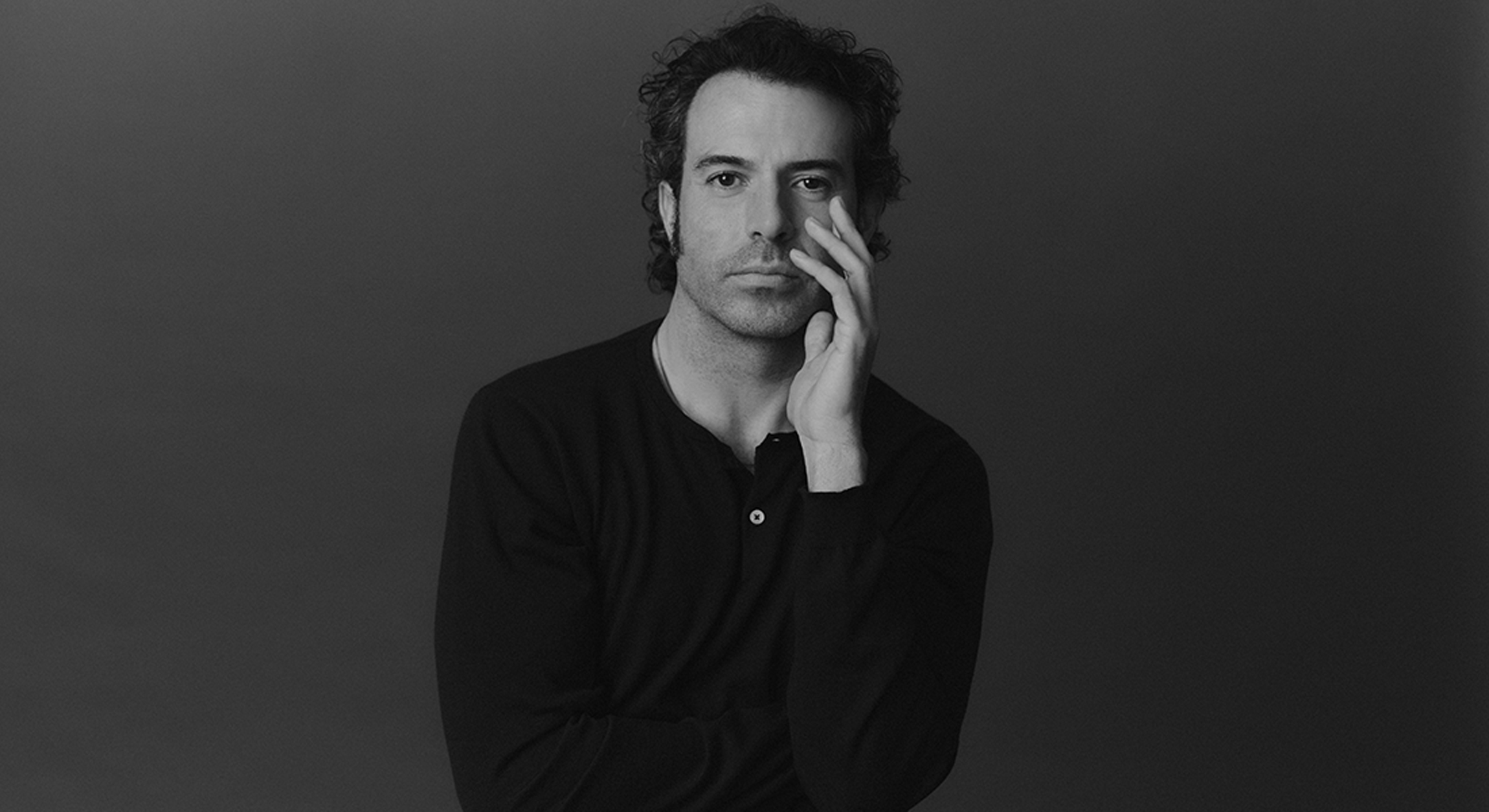
On a gray October morning, PBS will air the U.S. premiere of The Gold, a series inspired by the infamous 1983 Brink’s-Mat robbery. At its heart sits Tom Cullen, portraying John Palmer — a man whose notoriety is matched only by the moral complexity he carried into every room. It’s a role that suits Cullen perfectly. His career has always gravitated toward characters who live in the gray space between virtue and vice, demanding audiences lean in, question, and empathize.
For Cullen, The Gold was never just about crime. What drew him in was the project as a whole — the richness of the ensemble, the way creator Neil Forsyth chose to interrogate villainy rather than flatten it. Palmer, as Cullen explains, is written with depth and contradiction: a family man, the hero of his own story, capable of justifying his most heinous actions by convincing himself they were acts of provision, even altruism. The result is a portrayal that refuses easy judgment. We see both vulnerability and violence — and are left to sit with the discomfort of both.
That refusal to simplify has become Cullen’s calling card.
The Long Road from “Weekend”
Cullen’s breakout came early — and violently fast. Weekend, directed by Andrew Haigh, was not only his first proper acting job; it was a cultural moment. The film resonated deeply, particularly within queer communities, offering tenderness without apology. And yet, behind the acclaim was a young actor profoundly unprepared for the visibility that followed.
At the time, Cullen was broke — so broke he couldn’t afford food, couldn’t make phone calls, and walked to a Vogue shoot in New York because he didn’t have enough money for the subway. The contrast was surreal. He describes feeling like an imposter, rejecting the space he had suddenly been invited into, consciously or unconsciously pulling away from the spotlight. Visibility felt wrong. Too loud. Too exposed.
And yet, years later, strangers still stop him to talk about Weekend — to tell him how much it meant, how it made them feel seen. Cullen understands the irony. A film about visibility changed lives, even as he struggled to accept his own.
Moral Ambiguity as a Compass
From Weekend to Downton Abbey, from Black Mirror to The Last Days on Mars, Cullen has consistently chosen characters who resist moral purity. He’s uninterested in playing saints. “Who really wants to watch some pious, noble character?” he asks. Humans are fallible. Messy. Contradictory. That’s where the story lives.
He isn’t trying to be liked. He’s interested in the struggle of being a good person — and in characters who fail at it, repeatedly.
That philosophy makes The Gold a natural fit. Palmer is dangerous, charismatic, deeply flawed — and written with the kind of interior life Cullen is drawn to excavate.
Love in a Time of Fear
If The Gold explores moral compromise under capitalism, Cullen’s next project, Trespasses, interrogates love under political siege. Based on Louise Kennedy’s acclaimed novel, the series is set in 1970s Northern Ireland at the height of the Troubles. Cullen stars opposite Lola Petticrew as Michael — an older Protestant barrister who begins a forbidden relationship with Cushla, a young Catholic teacher.
For Cullen, the politics and intimacy are inseparable. Michael and Cushla are drawn together because they both yearn for more — for lives beyond the narratives imposed on them. Their love is not naïve; it is defiant. Cullen describes them as “two dandelions growing out of the tiniest crack in a slab of concrete.” The danger is precisely what makes the love magnetic. They choose one another despite the cost.
As Michael says in the series: “We must choose freedom over fear.”
Scale Without Surrender
Then there is House of the Dragon.
Details are, understandably, under wraps. But Cullen doesn’t hide his excitement. He’s a genuine fan of the world, the lore, the ambition. What excites him? “Everything,” he says — with the kind of grin that suggests even he knows how surreal this moment is.
The scale is unlike anything he’s done before. The intensity, the world-building, the sheer machinery of it. And yet, if history tells us anything, Cullen won’t lose himself inside spectacle. He has never allowed size to eclipse substance.
Roots That Run Deep
Despite working on international stages, Cullen remains profoundly Welsh — even if his accent doesn’t immediately give it away. He carries Wales in every fibre of his being. Raised on a small council estate in mid-Wales, his childhood was split between an artistic household — parents who worked as freelance writers — and a feral, joyful freedom outdoors. Football. Rivers. Trees. Bikes. “It was magical,” he says.
That combination — poetry and grit — defines not just Cullen, but Welsh artistry itself. He points to Burton, Hopkins, Sheen: actors who emerged from some of the poorest communities in the UK and reshaped global culture. For Cullen, access to the arts is not a luxury. It’s a necessity. Cut it off, and the country loses something irreplaceable.
Visibility, Doubt, and Staying
Cullen is candid about doubt. He has it constantly. There was a moment, around Downton Abbey, when he came closest to quitting. The sudden shift from privacy to being on the biggest show on television was overwhelming. He felt swallowed by it.
What kept him? Love for the craft. Not confidence — love. He loves acting too much to stop.
Fatherhood as Philanthropy
When asked about philanthropy or causes beyond acting, Cullen doesn’t reach for a campaign or a press-ready answer. He says, plainly: the most important and creative thing in his life right now is being a father.
That grounding is echoed everywhere else in his life. Health, for Cullen, isn’t about optimization — it’s about survival in an industry that demands physical and emotional stamina. Early call times. Battle scenes. Night shoots. Back again at dawn. He trains when needed, but what sustains him is getting home to his partner and children. Being with them makes the exhaustion worth it.
His off-screen rituals are disarmingly ordinary: changing nappies, DIY, building an entire kitchen with his own hands. Humor, too, is essential. His friends — a tight-knit group bonded by shared absurdity and “messed-up dad issues” — keep him laughing. He doesn’t know if he’d be here without them.
A Vessel, Not a Bridge
Asked whether he sees himself as a cultural bridge — between heritage, training, and global audiences — Cullen resists the framing. “I don’t see myself as a bridge at all,” he says. “I see myself as a vessel. The least interesting thing about my work is me.”
His job, as he sees it, is to get out of the way and let the character flow through.
Politics, Responsibility, and Saying the Quiet Part Out Loud
As his profile grows, Cullen is increasingly asked about responsibility. He shrugs off the idea of shaping narratives — at least consciously. But he does speak openly about what matters to him: men’s mental health. And politics.
He names Zack Polanski as someone who inspires him deeply — for his clarity, his refusal to obfuscate, his willingness to say what feels obvious but rarely spoken: that extreme wealth concentration is obscene. That billionaires don’t need to exist. That people working every day to feed their families deserve dignity.
It’s not radical to Cullen. It’s humane.
Between Shadows and Spotlight
Looking back — from Weekend to House of the Dragon — Cullen refuses to name a single defining moment. He’s never been confident enough to declare destiny. What he knows is simpler, and perhaps more enduring: he loves what he does.
And that, for him, is enough.
Tom Cullen’s career is less a straight line than a constellation — indie brilliance, prestige drama, global epics — each star brighter when seen in relation to the others. He reminds us that the actors who endure are not those chasing celebrity, but those chasing truth.
With Season 1 of The Gold now available on PBS and Season 2 on the horizon—and with Trespasses and House of the Dragon arriving later this year, Cullen stands at a rare intersection: intimate storyteller and international presence.
For Félix, this is not about predicting fame. It’s about recognizing artistry, cultural resonance, and humanity at the precise moment they converge.
Tom Cullen, in every sense, remains — and perhaps always will be — between shadows and spotlight.
Creative Credits
- Written by
- Molly Peterson
- Senior Editor
- Emily Chu
- Photography
- Pip
- Retouching
- Brianna Kish
- Styling
- David Nolan
- Grooming
- Paul Donovan