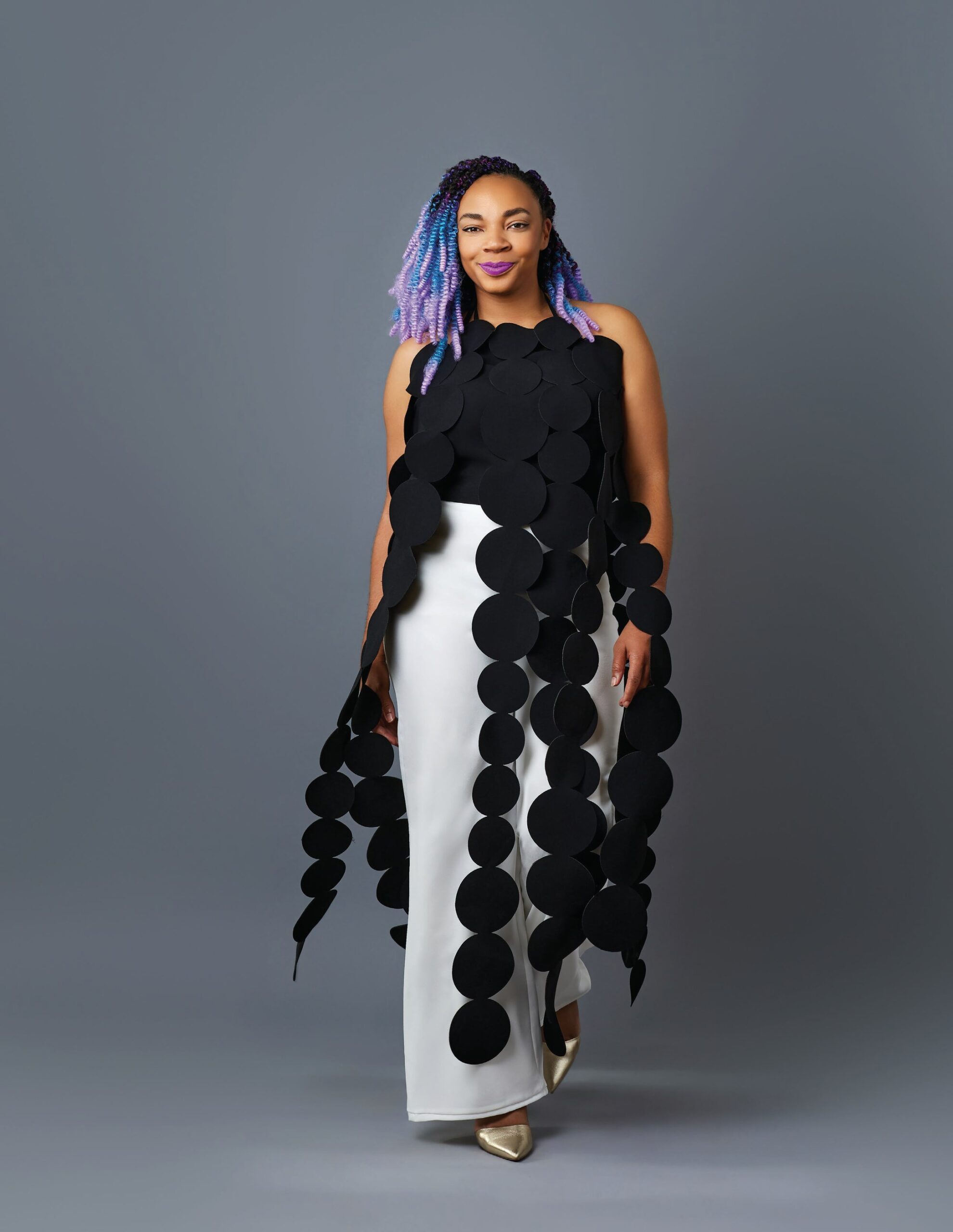
Before she was “The Toy Coach,” Azhelle Wade was a kid who turned a kitchen into a classroom and taught her little brother double-digit math with a pretend school kit. She remembers the surprise of watching him carry numbers “older kids” were supposed to learn, and the quiet thrill that followed: play as a lever, play as a shortcut to courage. That streak—turning make-believe into agency—runs through everything that came after: patents, Black Friday hero items, and, post-pandemic, a pivot that put education and access at the center of her work. Today, Wade moves between the studio and the spotlight with a teacher’s patience and a product lead’s rigor. On television she can distill a brand in sixty seconds. In real life she is slower on purpose, building an on-ramp for people who have ideas but not roadmaps—parents, teachers, doctors, and first-time founders who suspect the toy aisle can do more than it does.
Becoming
“There were many times in my life where play felt like power,” Wade says. “But I suppose when I played school with my little brother (against his wishes) was when I truly recognized the powerful, educational impact of pretend play.”
“My mom would often surprise me with little toy gifts from our corner store, and one day she brought home a pretend school set. I would open up that set and turn my kitchen into a classroom almost every Saturday while my brother begrudgingly attended as my one and only student.”
“At five years younger than me, I did have stuff to teach him, and I particularly remember the day I taught him how to add double-digit numbers in math… I felt like I’d helped him cheat the system, like we played our way into some crazy life hack.”
Excellence at home came with a challenge from her sister. “The toughest and most annoying thing she used to say to me over and over again was ‘look it up,’” Wade recalls. “After tirelessly answering question after question, my sister started answering me with a challenge and she’d point to our wall of encyclopedias… If we didn’t have the right volume, she’d teach me to use a thesaurus first.”
Nine-year-old Azhelle, by her own diagnosis, needed a spa kit. “I was a very busy and high-strung nine-year-old… I would’ve benefited from learning to calm my nervous system, relax a bit, pamper myself, and take care of my body and mind.”
Making things that last
“One of my patents is for a product called Zip Screens, a screen- printing kit that eventually sold at Walmart,” Wade says. The “napkin sketch” was a single disposable tool—a sealed paint packet with a built-in scraper that pulled ink through a stencil in one motion—so families could create at the kitchen table without the mess of frames and bottles. The trip from sketch to shelf meant trade-offs—paint volume, plastic thickness, small- hand ergonomics—without losing the promise that mattered: no extra tools, minimal mess, and ‘I did that myself.’
At Toys“R”Us, Wade was asked to deliver a Totally Me craft desk that looked like a $50–$60 piece of furniture but hit the Black Friday circular at $29.99. “I was told straight out, ‘These promos run on razor-thin margin, maybe 10–15%.’ I wasn’t okay with that,” she says. First versions were gorgeous—and too expensive. On a factory trip, she and her boss cannibalized plastic tubing from a kids’ play gym to rebuild the desk’s structure on the floor, then she designed a snap-on tabletop that did the heavy lifting: ruler, bead lanes, wells, hooks, lightweight shelves. Re-costed, the numbers finally worked: roughly 30-40% margin even at the promo price. From there she engineered the packaging and instructions so the value reached the living room without damage or dread.
After the shock
“The big pivot came after the pandemic,” Wade says. She left a VP post overseeing multimillion-dollar lines and rebuilt The Toy Coach as a lean, mostly remote business. Good leadership, for her, is now less about the headcount you manage and more about the strain you ask people to carry. She still cares about excellence and deadlines; she’s quicker to cut a project, adjust a launch, or say not yet if a human cost feels wrong.
Week to week, she watches a few simple signals: a healthy split between course and client revenue; list growth and engagement; calls that don’t swallow her three-and-a-half-day workweek; and tool creep that doesn’t outpace value. “If I’m spending more than 20% of revenue on tools, I cut,” she says.
Building a fairer aisle
Asked to draft the opening of a humane recall notice, Wade answers plainly:
“We’re recalling this toy because your child’s safety matters more than any sale we will ever make. We’ve discovered a risk we are no longer willing to accept, and we want to walk you step-by-step through what to do next, how to get a replacement or refund, and what we’ve changed so your family, and others, stay safer going forward.”
She loves pink and purple; she doesn’t love labels that tell a child what belongs to whom. “The only thing I’d like to change about girls’ toys is that they’re labeled girls’ toys,” she says. “Play should never make a child feel ‘less than.’ If the rules, the marketing, or the hardware make only one type of kid feel smart, beautiful, or ‘the hero,’ I’m out.”
Her policy brain shows up in education. Since 2020 she’s hosted Making It In The Toy Industry, a weekly free podcast that functions as a first class for would-be founders—plain- language breakdowns, step-by-step advice, and real stories before anyone spends big money or signs big contracts. From there, Toy Creators Academy (TCA) deepens the work: research and costing, IP basics, professional pitching, and—crucially—real connections to factories, designers, and safety experts. To widen access, Wade launched a TCA Scholarship with Learning Express Toys Lake Zurich in 2021 for aspiring creators with financial need. And the mentorship outcomes? “One of my favorite moments is when a Toy Creators Academy student goes from ‘I have this idea and a sketch’ to ‘My product is actually on a store shelf,’” she says—citing Allan’s first placement seven months after joining; Samantha’s re-sourced toy that hit ten specialty shops by June and sold out its presale; and designer Chrissy Fagerhold, who launched independently into Barnes & Noble and Target before later inking a deal with a major that once passed.
The classroom she’d build
Give her $250,000 for a public-school Play Lab, and Wade would build a maker-studio kids can actually use:
• Kit-Bashing Corner —take apart toys, salvage parts, build new mechanisms with cardboard, clay, and simple circuits. • Designer/Playtester Role Reversal —students alternate between making and testing, learning to give and receive real feedback. • Toyspiration Tuesday —books, objects, and family traditions become prompts for new games and toys.
She’d measure: raised hands, faster idea generation, teamwork, the count of new mechanisms, how many Tuesday prompts became working prototypes, and how many kids now believe toy designer could be their job What founders get wrong (and how to fix it) 1. Rushing without research. Know your shelf—who’s there, what price works, and what age truly buys. 2. Treating factories like magicians. Bring a bill of materials (BOM), real specs, Pantone colors, measurable feedback—and patience; good toy development takes a year. 3. Giving away too much too soon. “If you can’t project profit, you can’t know how much of your brand to give away,” Wade says. Get contracts reviewed. Ask the questions you’re afraid to ask.
Holiday crunch plan? With $5,000 and eight weeks, pick one hero product and one clear promise; build a lean funnel; create a 30–60 second demo, a handful of testimonials, and clean photos; retarget warm audiences; follow up abandoned carts; and walk into five to ten small retailers with inventory and a story.
The pressure cooker—and the edit button
On NBC’s On Brand, Wade says, she learned that the idea matters more than the pitch. The hardest note she kept—“you’re doing too much; edit”—became a ritual: remove one thing before calling a design finished. Cameras off, what lingered was not winning the accounts she expected. “You never know what’s coming. You pitch like you refuse to lose, and then you go back to work.”
Life, love, and a little glitter
Her wedding keeps two totems in the living room: a handmade wooden flower bouquet she painted to spill down her gown, and a polaroid frame that happens to have a few gold Lego men hanging off it. “I wanted my wedding to be an experience, not just a pretty picture,” she says.
Home is a lab run by a four-month-old CEO. “Parents don’t want to buy more stuff—we want the stuff we need to buy to do more.” Her latest delight: her son’s squeal. She also keeps her boundaries: she once walked away from a podcast licensing deal that offered a paycheck but required a perpetual license. “Sometimes I wonder what would have happened if I took it,” she admits. “But I drew the line at losing ownership over everything I’d built.”
Lightning, briefly
Shelf or shred? “Blind bags—shred for the environment. STEM kits—shelf. Collectible dolls—shelf. Surprise reveal slime—shelf because I love getting messy.”
Underrated/overrated? “Wooden blocks—underrated. Character licenses—underrated. Kid influencers—underrated. QR-enabled play—overrated.”
Last delight (non-work)? “My son’s squeal.”
Rule of play you won’t break: “Play should never make a child feel ‘less than.’”
Coda
“No child should feel ‘less than’ because of a toy’s rules, its story, or its hardware,” Wade says. The grown-up version isn’t far off: give people clear tools, honest math, and room to try. Kill the ideas that don’t serve. Defend the ones that do. The rest—the spark, the joy, the I did that myself—follows.
Creative Credits
- Written by
- Kelly Minter
- Senior Editor
- Emily Chu
- Photography
- Meagan Shuptar
- Photo Editing
- Brianna Kish