Winter has a way of narrowing the world. The calendar crowds. The light thins. Airports fill with the particular impatience of people trying to outrun their own weather. And then, every so often, a different idea of the season cuts through: not winter as endurance, but winter as edit—less noise, more air. Four Seasons’ latest Asia Pacific invitation is built on that premise. It isn’t a checklist. It’s a mood board for the traveller who wants warmth without the chaos that sometimes comes with it; culture without feeling like they’re sprinting through it; cities that restore rather than consume. The promise is simple: look east, where the season plays by different rules.
The new winter question
The old winter travel fantasy was pure escape: sun, sand, and a suitcase that never saw a sweater. The new fantasy is more precise. People are choosing environments that repair them—places with enough space to exhale, enough texture to feel changed, and enough flexibility to travel like a human being rather than a contestant. That shift is visible across the region in the way Four Seasons has been shaping stays: villa living that feels residential, long-stay rhythms that don’t insist you “do everything,” and experiences that pull you into place rather than parade you past it. As Rami Sayess, President of Hotel Operations for Asia Pacific, has said, guests are chasing “contrast and choice”—warmth paired with depth, comfort paired with a slower pace.
I. Islands, but make them intentional
Start where winter unhooks you fastest: water. In the Maldives, Landaa Giraavaru is the kind of resort that makes you notice nature as a living system—lagoon, reef, sky, all of it active. It sits within a UNESCO Biosphere Reserve, and the experience leans into that reality with a seriousness that feels rare in luxury: conservation work isn’t a decorative talking point here; it’s part of the day. There are excursions with marine biologists, and the type of lagoon time that feels like a reset button pressed gently. Kuda Huraa reads differently. Its energy is lighter—surf-forward, salt-air casual in the best way—yet still unmistakably Four Seasons in the way service anticipates without hovering. Together, the two resorts offer a choose- your-own-winter: barefoot intensity or barefoot ease, with privacy that makes a long stay feel not only possible but logical.
Vietnam’s coastal cadence
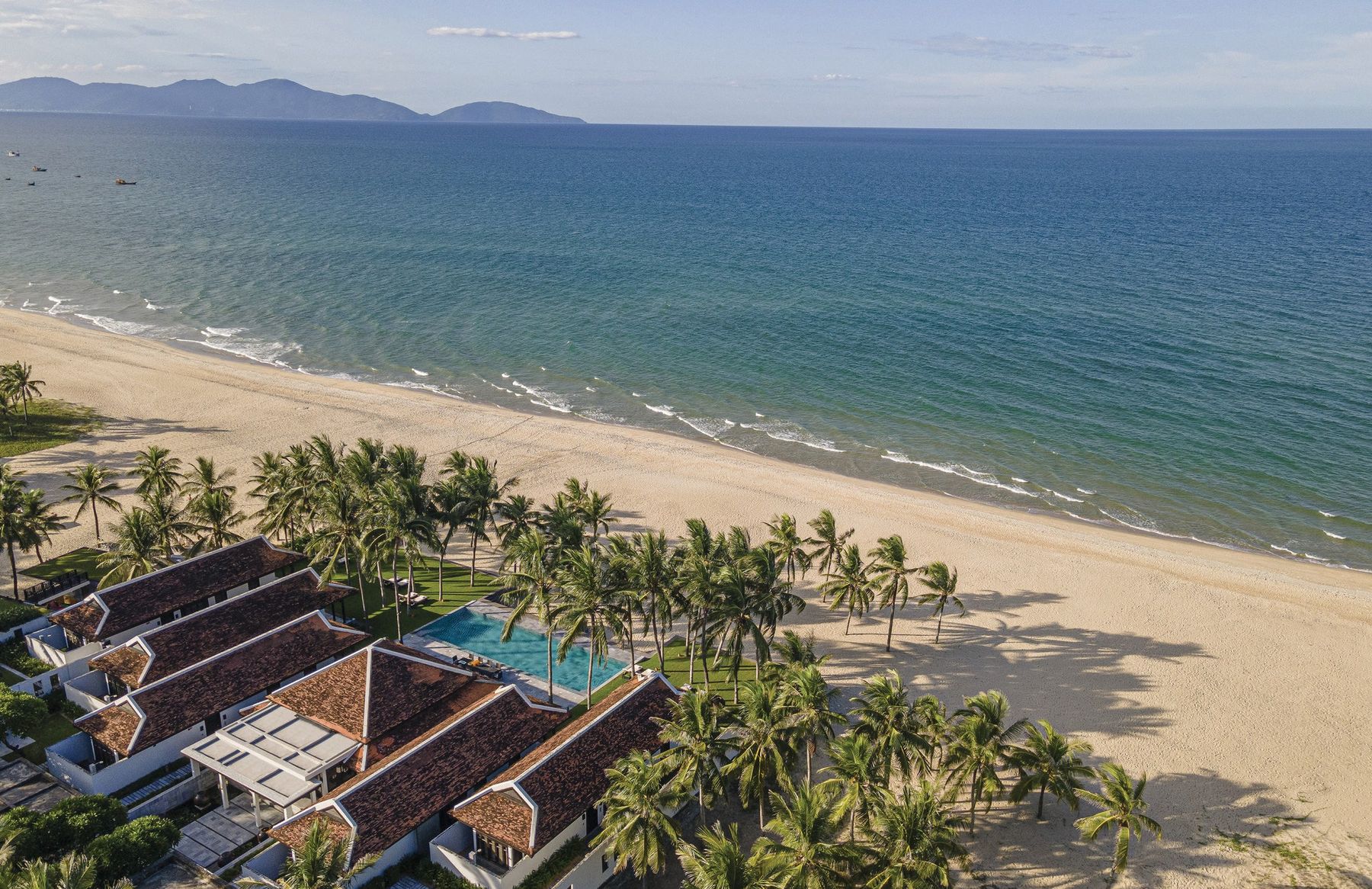
On Vietnam’s central coast, The Nam Hai, Hoi An has a particular kind of quiet: refined, but not stiff; polished, but not precious. The architecture encourages open-air living, and the villas are built for the way people actually travel right now—families, friends, multi-generational groups that want to share time without sharing every moment.
The draw is the rhythm: a beachfront base with enough calm to linger, and an easy bridge to the Ancient Town of Hoi An when you want colour, craft, and history in the bloodstream of your day. This is the kind of place where “cultural travel” doesn’t mean rushing. It means returning to your villa with sand still on your feet and a story still forming.
Langkawi and Koh Samui: soft adventure
If your ideal winter isn’t a full stop but a softer acceleration, Langkawi and Koh Samui are built for it.
Langkawi’s lush landscapes invite you into mangroves and waterways—encounters with wildlife that feel like you’ve stepped into a documentary without needing to perform for it. Koh Samui offers its own version of gentle movement: boating, snorkelling, hidden bays, and those long island afternoons where the most ambitious plan is deciding whether you’ll stay in the water a little longer.
Bali, in two chapters
Bali’s best trick is how quickly it recalibrates the nervous system. Four Seasons leans into that with a two-property rhythm: Jimbaran Bay on the coast, then Sayan in the jungle—an itinerary designed to feel less programmed and more like you’ve slipped into the island’s pace.
It’s Bali for travellers who don’t want their days pre-cut into neat rectangles. Temple rituals, riverside stillness, rice-field quiet, village life—moments that feel lived rather than “booked.” Unplugging, here, is not a posture. It’s a practical outcome.
II. Cultural depth as the real luxury
There is a kind of travel that looks impressive and leaves you unchanged. The more interesting kind is slower—the one where you return with a new lens.
Northern Thailand delivers that sensibility with force. At the Tented Camp in the Golden Triangle, nature is not background; it’s the point. At Chiang Mai, the landscape opens into rice fields and broad skies, and the experience revolves around a rhythm that feels restorative rather than performative: cuisine that tastes local without turning into a lecture, wellness that feels like care rather than trend, and cultural encounters that don’t rush you out the door.
Across the region, Four Seasons has been building experiences that read like keys rather than tours: Kyoto through centuries-old artistry, Suzhou through canals and
Wel
gardens that reveal the city beyond the postcard. The point is access, yes—but also intimacy.
Wh
Kyoto: stillness in a city of beauty
It’s
“how Four Seasons Hotel Kyoto sits in the historic temple
district, where the city’s energy can feel both sacred In and cinematic. The appeal isn’t just location; it’s min stillness. Garden-facing rooms, refined design, and arou seasonal cuisine create a base that supports deeper clin exploration—Kyoto as lived experience rather than guid “must-see” sprint. med
nea It’s a hotel that understands the most luxurious thing retu a city can offer in winter is not just excitement, but
calm. The
you Palau: the escape that floats allo For travellers who want their winter to feel singular,
How
Four Seasons Explorer Palau redefines what “checking in” can mean.
If y Palau is one of the Pacific’s last frontiers in the way win people still say that phrase with awe. Aboard an • intimate floating resort, days unfold around marine discovery and island time—hours that feel like you’re • inside a world you can’t quite believe is real. It’s the kind of trip that turns into a story you tell with your • hands.
•
III. Cities that don’t drain you
Winter in Asia’s great cities has its own appeal: cooler The air, clearer skies, a sense of breathing room. vers
A f
Tokyo at Otemachi offers a sky-high kind of serenity—views that make the city feel like an architecture
model and suites that function as real retreats. Osaka Man brings contemporary elegance with the confidence of Sea a city that knows its own taste. Beijing and Shenzhen can provide a polished base for cultural and creative deta energy, with the luxury of returning to quiet. now
how Hangzhou at West Lake and Suzhou lean into classical ago beauty—gardens, water, traditional forms—where
the city and the landscape feel intertwined rather Win than opposed. Acr
quie Southeast Asia’s capitals also shine during winter. Singapore and Kuala Lumpur put you at the center of the action, while generous accommodations let you live with a slower, more lived-in pace.
lness as the through-line
at connects all of these places isn’t just geography. the way wellness has moved from “spa day” to w you live your day.” Chiang Mai, it can look like movement, ndfulness, and farm-to-table nourishment shaped und balance. In Singapore, it can look more ical—longevity programming that measures, des, resets. Elsewhere, it’s quieter: breathwork, ditation, Muay Thai training with a view, yoga r rivers, small rituals that make a trip feel like a urn to yourself. best wellness travel doesn’t make you feel like re being fixed. It makes you feel like you’re being wed to rest.
w to read this map
you’re wondering where to start, choose your ter emotion: If you want pure lightness: Maldives or Koh Samui. If you want culture that lingers: Kyoto, Suzhou, Hoi An. If you want nature that changes your posture: Golden Triangle, Chiang Mai, Palau. If you want a city that acts like a sanctuary: Tokyo, Singapore, Hangzhou. point isn’t to do it all. The point is to choose the ion of winter you actually need.
nal note on flexibility
ny of these journeys can be layered with Four sons’ Experience More offer—spending credits you use toward dining, spa and wellness—an unflashy ail that matters in practice. The best luxury right w is agency: the ability to shape your stay based on w you feel that day, not how you planned months nter is still winter. But it doesn’t have to be heavy. oss Asia Pacific, it can be warm, spacious, and etly transformative.
Creative Credits
- Written by
- Valentina Rowe
- Images courtesy of
- Four Seasons Hotels and Resorts