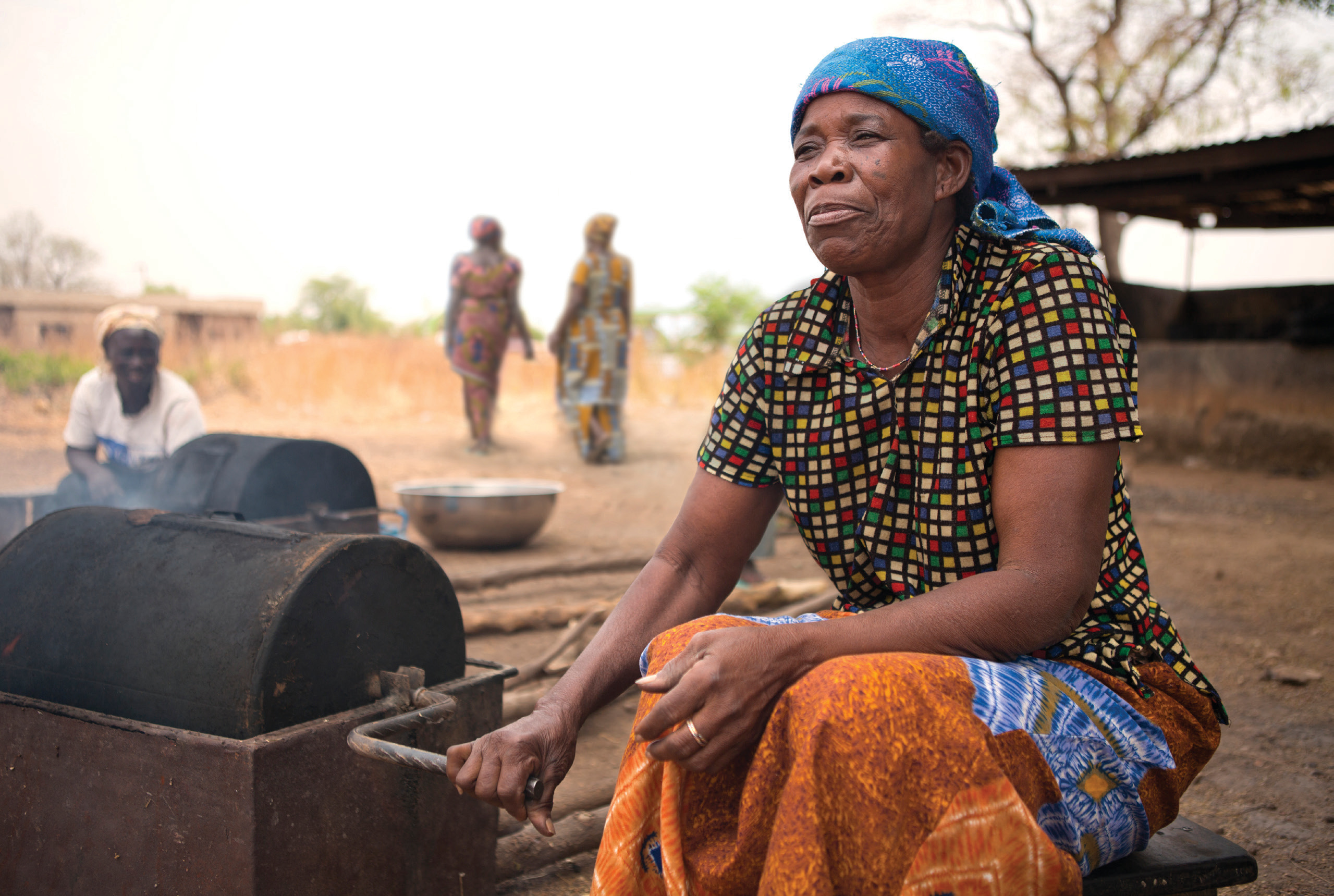
In the Kathmandu Valley region of Nepal, Gyani Shova Shakya sits alongside a group of women, their hands working expertly as they knit hats, slippers, leg warmers, hand puppets, scarves, and more. They learned this valuable skill through training provided by Kumbeshwar Technical School (KTS), which was established in 1983 to provide socially and economically disadvantaged community members with marketable skills; in order to improve the quality of their lives, their families’ lives, and the strength of their community as a whole. For Gyani, the opportunity to learn handknitting not only impacted her life, it also changed the trajectory of her children’s lives, as well. Because of her work with KTS, Gyani’s daughter, Sarala, watched her mother earn a living, and looked up to her as an example of what’s possible. KTS sponsors Sarala’s education, as she works toward a Bachelor’s of Information Management. “If not for KTS, I would not have been able to study IT,” Sarala says. “From my mother, I learned to be independent.” Handknitting is just one of the vocational skills KTS teaches, and it doesn’t stop there: adult literacy classes, a nutrition and health clinic, health insurance, a free nursery and primary school, a daycare center for children of staff, producers, and trainees, and fair trade income-generating programs are among the many benefits. These types of life-changing opportunities are the driving mission of Ten Thousand Villages, known for its wide selection of unique, handcrafted wares from across the globe. Much more than just a store, Ten Thousand Villages is a global maker-to-market movement, and a pioneer of fair trade, committed to putting people and planet first to provide consumers with a way to shop with intention for ethically-sourced handcrafted items. With two in-person stores in the Cincinnati area to choose from, as well as the option to shop online, every purchase empowers artisans from around the world and, as with Gyani’s family, generations of families are positively impacted and forever changed. It all began in 1946 with a woman named Edna Ruth Byler, a homemaker, and volunteer who lived in Akron, Pennsylvania. Her husband held a director position with Mennonite Central Committee, a non-profit organization providing disaster relief and working for sustainable economic development.
While accompanying her husband on a business trip to Puerto Rico, Edna Ruth met women in La Plata Valley who were struggling to provide basic necessities like food for their children. These women were artisans who created beautiful hand-embroidered textiles, but didn’t have access to places to sell them. Inspired by meeting these women, and fueled by her entrepreneurial spirit, and belief in the importance of dignified work, Edna Ruth purchased some of the handmade textiles at a fair price, taking them back to the United States where she began selling them to friends and neighbors. She used the proceeds to repeat the process. By the 1950s, Edna Ruth was delivering handcrafted pieces to women’s sewing circles, and entire groups of interested people across the country. It was key for her to share the stories of the artisans, and describe how each purchase meant that a woman gained economic independence, and a chance to give her family—and her community—a brighter future.
Such is the case with Comfort Adjahoe Jennings, the CEO and founder of Ele Agbe Company Limited in Ghana. Ele Agbe produces a variety of handmade items, including shea butter. Comfort recognized that shea nuts were a special resource of the area, but were being underutilized, so Ele Agbe added handcrafted shea butter cosmetics to their product line, and began exporting them. The organization employs approximately 50 artisans, all young adults, and mostly women, and offers training programs for under-educated youth. Ten Thousand Villages partners with Ele Agbe to expand their reach through fair trade. “My life is all about giving back what’s given to me,” Comfort shares. “The women I work with become family. I don’t just go buy the shea product from them…we have a relationship.”
Edna Ruth shared this people-first mindset. With the support of Mennonite Central Committee, Ten Thousand Villages was officially born to expand on her important work of bringing artisan creations to market, in order for them to earn a fair living wage. As the movement grew; affiliated but independent non-profit Ten Thousand Villages stores, as well as stores controlled by the Ten Thousand Villages organization, began to open across North America to sell the handcrafted items. The company also became one of the founders of the World Fair Trade Organization (WFTO), which was formed to expand Fair Trade efforts, and ensure that the basic principles of Fair Trade are followed for the benefit of artisans in challenging economic circumstances worldwide.
As it evolved, Ten Thousand Villages committed to providing interest-free advances to artisans with whom the company works, so they can purchase necessary materials, and pay the balance of the cost of the order when the handcrafted items are delivered to the docks in the country of origin. All of this meant that Ten Thousand Villages accepted the responsibility for, and risk associated with, shipping the artisan produced goods to North America, importing the goods into Canada and the US, storing, warehousing, and distributing the goods and selling those goods to customers. This type of partnership enables non-profit organizations like The Rajana Association in Cambodia to maximize their profits, so they can continue to teach young Cambodians traditional craft-making skills that both honor their rich cultural traditions, and empower them to earn a living. The artisans who work with The Rajana Association use bombshell casings recovered from their land to up-cycle into contemporary brass jewelry. This innovative use of materials is not only environmentally conscious, but the reshaping of bomb remnants into symbols of beauty, and hope, is truly transformational in both form, and spirit. Today, Ten Thousand Villages continues its mission, working with artisans in 23 countries around the world, more than 75 artisan groups, and more than 20,000 makers – the majority (60%) of whom are women. These buying relationships, which are, on average, 20 years long, offer a glimpse into the profound impact this maker-to-market movement has on generations of artisans and their families. A woman with young children who learns a skill or trade can help provide financially for her family, empowering, and inspiring, not only herself, but also her children as they grow. With this example in front of them, and the opportunities that fair trade provides, children are able to receive an education, learn marketable skills, grow into adults with work of their own, care for their health, give back to their communities, and so much more. This mission resonates with individuals, and communities, across the United States, propelling the opening of stores, such as the first Ten Thousand Villages store in Cincinnati, Ohio, in 2002. Since that time, a second store opened in a northern suburb. Together, the Cincinnati stores majorly contributed to Ten Thousand Villages by selling hundreds of thousands of dollars worth of fair trade items, and connecting consumers in Cincinnati, and beyond to a deeper purpose. Shoppers have the opportunity to do more than simply buy a product when they make a purchase through Ten Thousand Villages; they receive a distinctive, handcrafted, high-quality item, and in turn, they participate in a global movement, and make a meaningful difference in the lives of talented artisans around the world. To shop at Ten Thousand Villages in the Cincinnati area, you can shop online or experience the world in a store in-person at 2011 Madison Road, Cincinnati, OH, 45208, or 11316 Montgomery Road, Cincinnati, OH, 45249. Special thank you to Sydney M. Prochazka, Board Member of Ten Thousand Villages, Inc. Cincinnati
Creative Credits
- Written by
- Jen Tucker
- Senior Editor
- Laura Notorangelo
- Image courtesy
- Ten Thousand Villages