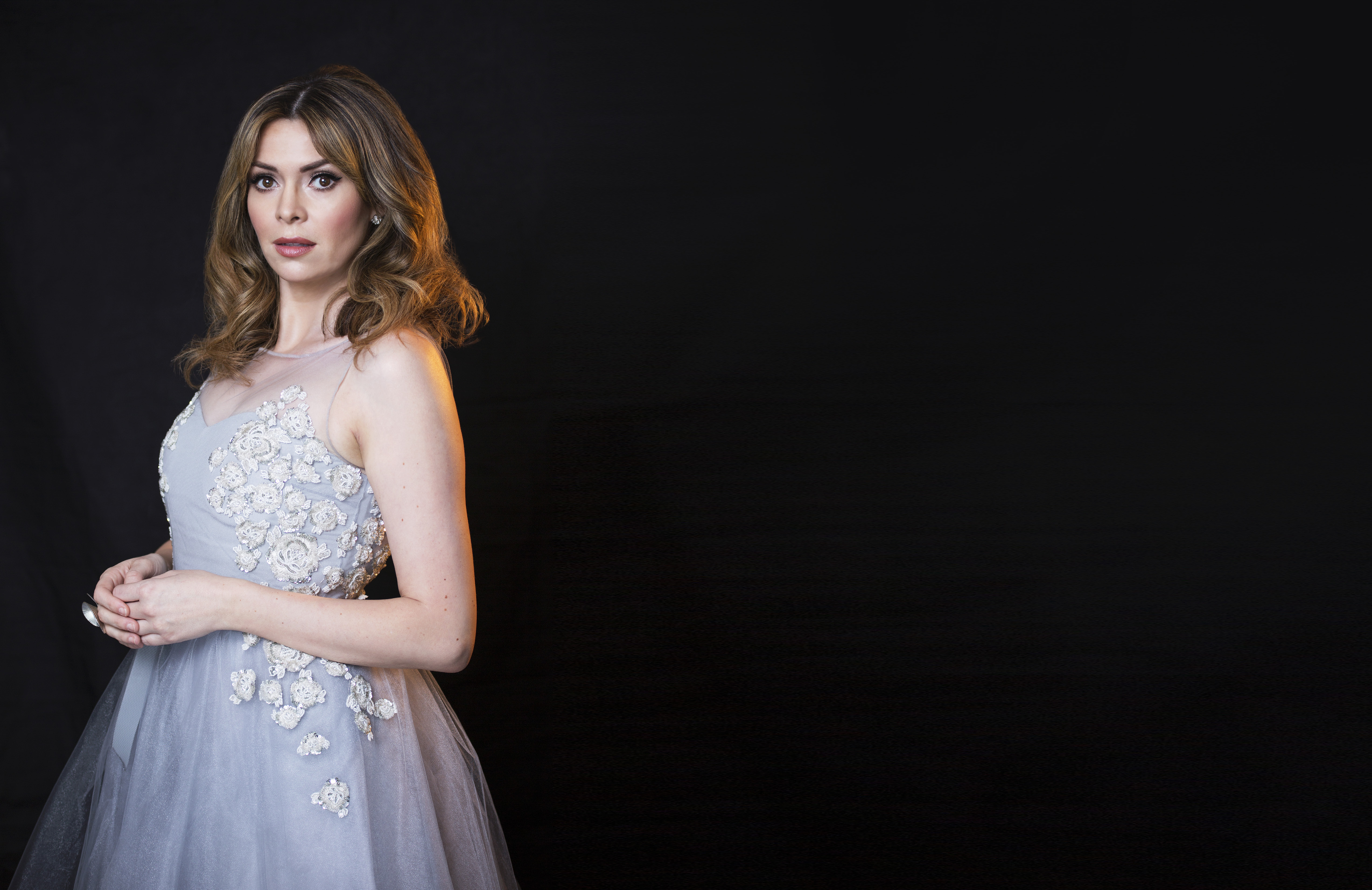
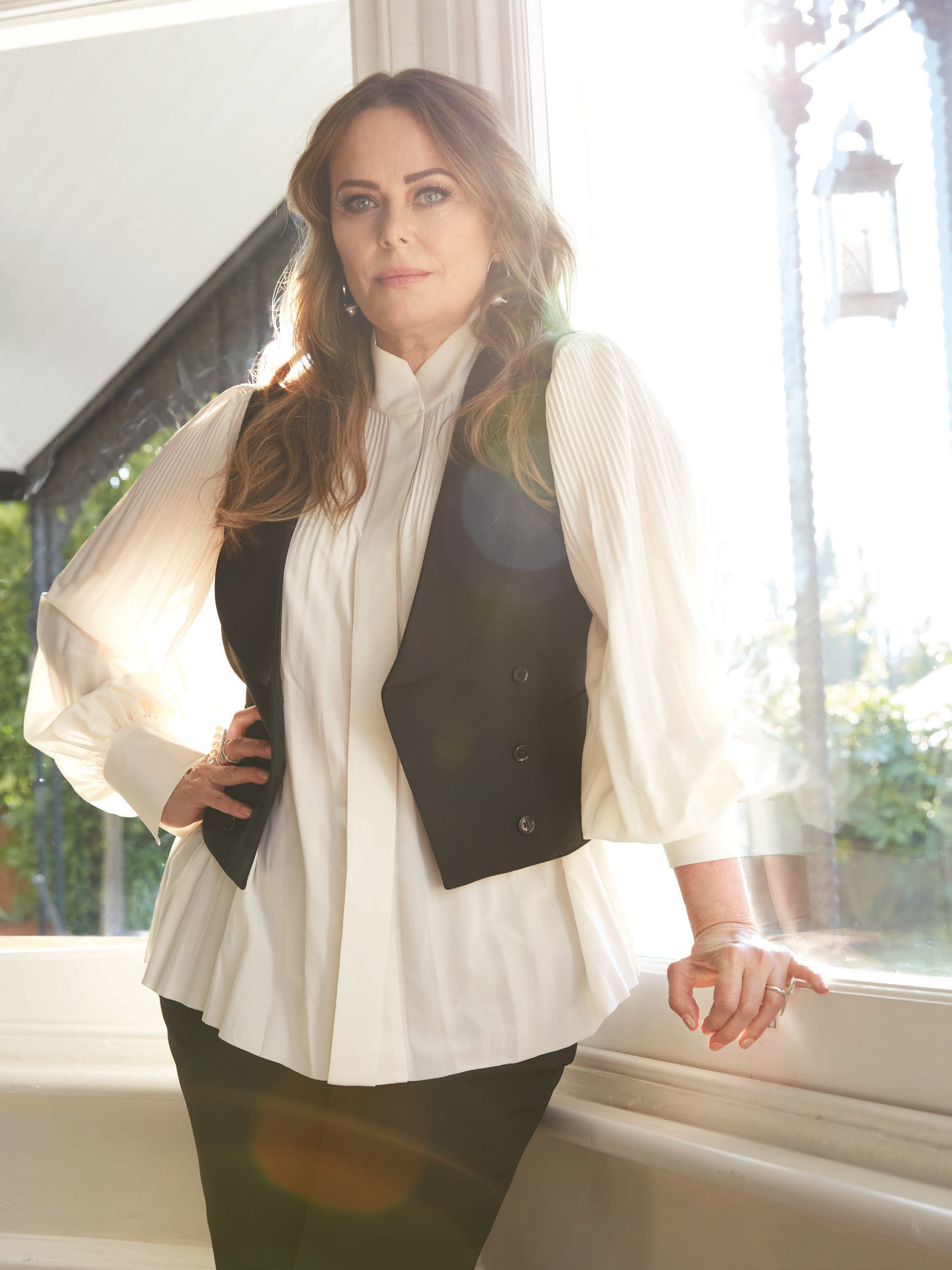
From bold dominatrix to fierce matriarch, Golden Globe-nominee Polly Walker isn’t afraid to step into big shoes.
Polly Walker is no stranger to the limelight. Featuring as Lady Featherington, a bold matriarch, in the massively successful Netflix series Bridgerton, Polly first graced our screens as the sweet and innocent Lorna Doone in 1990, starring alongside Hollywood hunk Clive Owen. Since then, she’s consistently caught the public’s eyes, relinquishing innocence to play strong and unapologetic women such as Irish spy Annette in the movie Patriot Games (1992) as well as socialite Lady Caroline in the Grammy-winning movie Enchanted April (1991). She reached the apex of her career in 2006 when she was cast as Atia in the HBO series Rome, delivering a Grammy-worthy performance. All the roles she played are united by a common thread: fierceness. The women she brought to life on-screen fight fiercely and unapologetically for their goals: Annette fights for political idealism, Atia for power and status, Lady Caroline is instead determined to assign a deeper meaning to her life and Lady Featherington and Peggy Sykes fight fiercely to protect their family. Much like most of these women, Polly is straightforward and strikingly genuine. Despite having reached multiple career milestones, she remains ambitious and humble; fearlessly driven by curiosity as well as the insatiable desire to “jump off the diving board” and delve into exciting new projects.
You’ve starred in multiple feature dramas, most notably Rome,
what in particular draws you to these narratives and to female antagonist roles?
I suppose that they’re pretty epic stories generally and they’re not your kitchen sink dramas, they require big emotions and that’s always fun to play. They’re also generally rather spectacular working and I love working with large casts and big crews. It’s all very fun and exciting.
Do you see any similarities between Peggy Sykes and Atia?
Not at all really, no I don’t (laughs). I suppose what they have in common is they both have a heart of gold. There you go, probably not the answer that you were expecting.
How did you prepare for the role of Peggy Sykes in the HBO series Pennyworth? Do you see yourself in some aspects of her personality?
I suppose I didn’t really have to prepare. I am from the North, so I’ve always been surrounded by lots of straight-talking and strong women, who don’t tolerate any nonsense or bull, I have lots of examples of those women in my life. So yeah, I just learned my lines.
What role are you most tied to?
Generally, the one that I’m doing currently. I get very attached to the characters when I play them but once they’re gone, they’re gone.
How do you balance motherhood and a booming acting career?
With difficulty but also with a lot of support and help from various people whether it was my mom, my sisters, babysitters, and nannies. Lots of strong women helped me raise my children.
What in particular drew you to Bridgerton? Did you expect it to be this big of a success?
I think it took everyone by surprise, to be honest. I hoped it would be successful, but I try not to predict or concern myself with whether a project I’m working on will be acclaimed. I try to just concentrate on the job itself and playing the character to the best of my ability. I think everybody was blown away and thrilled with the reaction it got.
Is there a particular Bridgerton cast member that you’re tied to?
I’m tied to all of them, I think everybody is so unique and different. They all offer something totally different. They’re a wonderful bunch of people. I spend a lot of time with my daughters and they’re great girls, they’re lots of fun, really clever and smart and hard-working. To be honest, everybody is pretty cool.
What was filming season two like, was it what you expected, or was it different?
I suppose it was different in the sense that we knew what we were doing with the characters, and we knew where we were going and how it would look. When we filmed season one, we didn’t really have a clue. I suppose it was also slightly daunting because whenever you do something the second time you worry that you’re not going to be able to do it as well or remember the character. Overall, I’d say it was a fun experience and challenging all at the same time.
Did you enjoy working with Netflix to produce Bridgerton, was there something in particular that surprised you about how they go about filming their series?
I’m not sure, this was my first time working with them, but they went about it as most TV or film companies do, completely professionally. I can’t say they had a radically different approach compared to other very good productions I’ve worked on. I just found them simply very friendly and approachable. I suppose maybe that was surprising, that such a huge company was so approachable and friendly.
What fascinates you the most about Shonda Rhimes’ modern approach to period dramas?
I think it’s the freshness, it draws audiences in from all ages, it’s very inclusive, it strips away all the stuffiness of period dramas. It’s also intelligent, pro-women and, overall, a very strong voice and that’s nice to be connected to.
What other Shonda Rhimes narratives would you have liked to be a part of?
Hmm. I don’t know, she’s such an amazing writer, I would like to be involved in pretty much anything she’s written as long as I was the right fit. I certainly wouldn’t turn down anything she’s written.
Are there any characters that, looking back, you would play differently now?
Who knows, I think I would probably do them all differently, but I think you have to honor what the story, the script and the writer want you to do so you’re kind of confined to the script, either way, that’s where your character is. I mean obviously, If I had to replay something I did as a twenty-five-year-old it would be a very different version, but I think no, I take my inspiration from the pages. So, overall, I don’t think so.
Is there a specific technique you use to prepare for roles, or does it vary according to the role you’re playing?
I trained as a method actress, I went to a school that taught the Stanislavski method, but I think every actor uses the method in some way or form. I like to identify as much as I can with the character and to believe, to be in the moment which is a very actory phrase. You have to jump off the diving board when they say action and believe what you’re saying. I try not to be self-conscious; I try not to have any vanity and I try to just react and listen to what the other actor is giving me in that moment. Like we do in real life, like me and you are doing right now.
Do you pursue/accept jobs according to the specific role your character plays within the narrative or do you consider the narrative as a whole?
I consider the narrative as a whole and it’s not like I have a specific character or identity that I like to play. I consider the film as a whole and my role within it and I suppose I wouldn’t do anything that I felt was degrading or distasteful.
Is there a specific director that you haven’t worked with yet that you would like to work with in the future?
Oh God, there are hundreds, hundreds, all the ones that are churning out the best films at the moment. I would chop off my left arm to work with some of them. So, anybody who’s riding high at the moment I would like to work with.
Do you also like performing in theaters with a live audience or do you prefer film?
I have done it in the past, that’s what I started off doing, I was at the Royal Shakespeare Company (RSC) and the National Theatre, but I found it pretty challenging. I’m so used to now applying techniques that are valid in front of the camera that translating my performance into a much bigger theatrical project feels daunting. I would want to rehearse a lot and I would need to feel very secure with the director. It’s quite a scary process, going on stage, and it would have to be under the right circumstances. I have definitely enjoyed it, but I have also been terrified by it.
What was it like filming during Covid, are the restrictions easing now?
I’m not sure what it will be like moving forward but when we were filming it was pretty strict, we were being tested every couple of days or every day possibly. We wore masks all the time, even during rehearsal and it definitely takes some of the joy out of the experience. It was a necessary evil in order to continue doing the show so I’m definitely grateful for that, but I can’t wait for the day when we won’t have to do any of that.
Creative Credits
- Written by
- Gaia Stanzani Ghedini
- Photography
- Alisa Connan
- Styling
- Arabella Boyce
- Hair Stylist
- Darren Fowler
- Makeup Artist
- Lan Nguyen Grealis
- Retouching
- Brianna Kish