




Holding the Center: J. Bernard Calloway on fatherhood, family, and the quiet strength of Terry Carson


JBernardCalloway_0376_highres
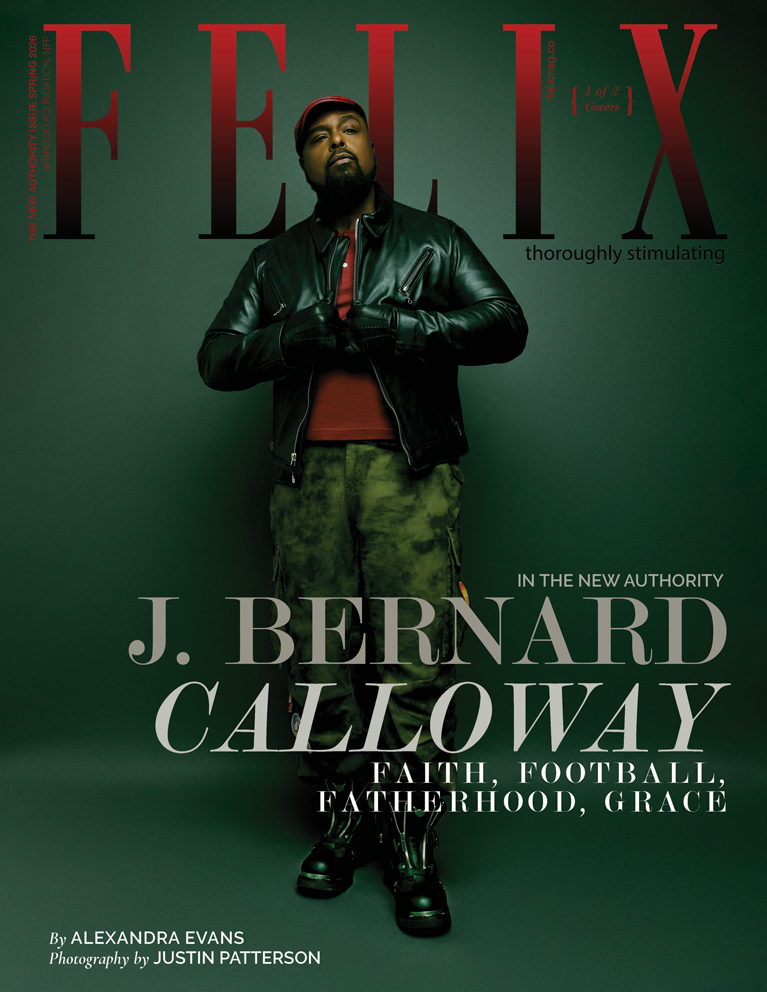
Photo Credit: Talent, J. Bernard Calloway. Writer, Alexandra Evans. Senior Editor: Emily Chu. Photography by Justin Patterson. Photo Retoucher, Brianna Kish. Fashion Stylist: Kristopher Fraser. Grooming: Andrea Fairweather. Publicist: Katrina Boswell. Wardrobe: MCM monogram shield sunglasses. UNTUCKit sweater.
Holding the Center: J. Bernard Calloway on fatherhood, family, and the quiet strength of Terry Carson
JBernardCalloway_0426_highres
Photo Credit: Talent, J. Bernard Calloway. Writer, Alexandra Evans. Senior Editor: Emily Chu. Photography by Justin Patterson. Photo Retoucher, Brianna Kish. Fashion Stylist: Kristopher Fraser. Grooming: Andrea Fairweather. Publicist: Katrina Boswell. Wardrobe: Elie Balleh shirt and blazer. J. Bernard wears his own pants, shoes, and belt.
Holding the Center: J. Bernard Calloway on fatherhood, family, and the quiet strength of Terry Carson
JBernardCalloway_0885_highres
Photo Credit: Talent, J. Bernard Calloway. Writer, Alexandra Evans. Senior Editor: Emily Chu. Photography by Justin Patterson. Photo Retoucher, Brianna Kish. Fashion Stylist: Kristopher Fraser. Grooming: Andrea Fairweather. Publicist: Katrina Boswell. Wardrobe: Chamberlin cardigan. Billy Reid shirt. J. Bernard wears his own slacks, shoes, and vintage ring.
The hardest thing to play on television is not rage. It is not charm, or grief, or swagger, or pain dressed up as confidence. The hardest thing to play—convincingly, without sentimentality, without slipping into cliché—is steadiness.
Steadiness is easy to overlook because it does not perform itself. It does not break furniture. It does not deliver the monologue that wins the clip package. It does not throb with visible desperation to be seen. It simply holds. It absorbs impact. It anchors.
That is what J. Bernard Calloway gives Terry Carson on The Ms. Pat Show: the rare authority of a man who does not need to dominate the room in order to anchor it. Long after the punch lines have landed and the episode has ended, what lingers is not only Terry’s kindness or his humor. It is his ballast. His patience. The feeling that if the walls began to shake, this is the man who would know how to keep the picture frames from falling.
Calloway understands that kind of man from the inside out. He did not invent him in a trailer between takes. He built toward him over years—through church, music, football, Broadway, fatherhood, disappointment, discipline, and the long, unspectacular labor of becoming someone other people can lean on.
The First Stage
Before he was an actor, before he was a husband, before he was a father trying to make sure his child’s life would open wider than his own, he was a church boy in Fort Lauderdale with rhythm in his body and performance already brewing under the skin. He grew up singing, playing drums and piano, memorizing Christmas and Easter speeches, stepping into church plays, carrying scripture and song as if they were simply part of breathing. Church was not a side note in his life; it was structure. It was stage. It was community. It was the first place he learned that words can do something to a room when they are spoken with full conviction.
He says the first dream was to become a singer like his mother and father. That detail matters because it tells you something essential about him: the performer was never an import. He did not stumble into expression by accident. Art was already in his bloodstream, even before he had language for what kind of artist he might become. The child who was always listening, always moving, always imitating relatives for a laugh, was already rehearsing a future he did not yet know would require him.
Football shaped him just as deeply.
This is where lesser profiles would settle for the easy contrast—athlete turned actor, brute force giving way to sensitivity—as if a Black boy’s life must always be translated through extremes. But that misses the more interesting truth. Football taught Calloway brotherhood. Accountability. Collaboration. It taught him what it means to do your job inside a larger whole and understand that the person next to you matters to the outcome. Long before he knew how to find a scene’s rhythm, he knew how to move inside a formation. Long before he understood ensemble acting, he understood the discipline of belonging to something bigger than himself.
So when he arrived at Alabama State on a football scholarship, the ingredients were already there: music, mimicry, church, physicality, discipline, appetite. All life had to do was light the match.
When Reinvention Hurts
The turning point came through The Gospel at Colonus, when someone in the theatre department saw him singing on campus and told him to audition. He booked it. What hooked him was not only the thrill of performance but the whole ecosystem around it—the rehearsal process, the stage management, the lighting plots, the building of a set, the electric chemistry of making something with other people. He loved all of it. Loved it enough to change course. Enough to shift his major and minor from Accounting and Music to Theater and Print Journalism. Enough to endure his father’s displeasure and keep moving anyway.
But he is too honest, and too seasoned, to tell that story as a clean act of destiny.
He did not, in some cinematic burst of courage, simply abandon football for art. Injuries and a failing athletic department helped open the door. The old life did not vanish nobly. It hurt. He says he used to dream about football after he stopped playing—dreams of running toward the end zone and waking before he scored. There is a whole elegy inside that one image. We like reinvention when it looks elegant. In truth, reinvention is often grief wearing work clothes. You leave one self behind to become another, and sometimes your body keeps reaching for the life that has already gone.
Theatre met him there—not by erasing the old self, but by revealing what he had always been carrying. He says theatre taught him to believe in himself more, to understand his self-worth among other great artists. The sentence sounds simple. It is not. For a Black man in the arts, self-worth is not a decorative insight. It is survival equipment. It is what lets you keep walking into rooms that were not built with you in mind and refuse to apologize for taking up space inside them.
Broadway sharpened that lesson into steel.
What the stage demands from an actor, Calloway says, is eight shows a week—live, uncut, the same material made fresh every day. That word, fresh, is doing a lot of work. It means that truth cannot become habit. It means you cannot coast on yesterday’s feeling. It means the body must keep rediscovering what the text asks of it. Broadway gave him not only polish, but pressure. The stakes are always high. You never know who is in the house, who you might meet backstage, who might be carrying your next chapter in the breast pocket of a blazer.
He remembers performing at the Tony Awards with Memphis at Radio City Music Hall and feeling the kind of awe that only happens when your own life briefly overlaps with the mythology you grew up watching from far away. “Michael Jackson moonwalked here,” he thought. “And now I’m here.” Goosebumps. It is one of the article’s most revealing moments, because what comes through is not ambition but wonder. Not “I have arrived,” but “I cannot believe this room made space for me.”
The Work of Presence
That humility—real humility, not industry politeness—follows him into The Ms. Pat Show, where he plays one of the most grounded fathers on television.
There is a temptation, when writing about Terry Carson, to overstate the novelty and turn him into a social studies lesson. Better to say this plainly: Terry matters because he is allowed a full interior life. He is loving, patient, present, funny, frustrated, thoughtful. He is not an abstraction of Black fatherhood. He is a man inside it. Calloway says he felt a responsibility to get that right, and not only for himself. Jordan E. Cooper, the show’s creator and showrunner, felt that responsibility too. Calloway describes taking the baton from Cooper and expanding what was already there. That is a beautiful description of collaboration, but it is also an ethical one. A role like Terry is not simply a character assignment. It is a chance to repair the image.
He wanted audiences to see that there is nothing soft about a man who cries sometimes. Men are human too, he says. The line ought to be obvious. It still lands like an intervention.
What makes Terry so effective is that he does not feel written from theory. Calloway says he is not drawing so much from particular men he knew as from his own daily life as a Black man, a father, a husband, a brother, a businessman moving through the world now. That answer is more radical than it first appears. It rejects nostalgia. It refuses the idea that Black masculinity must be excavated from the past to be understood. Terry is not some museum piece of “good fatherhood.” He is contemporary. He is happening right now. He is what it looks like when the work of manhood includes listening.
And Calloway has learned from him too. Through Terry, he says, he has come to understand that listening, patience, understanding, love, and respect can create real growth. They can kill hate. They can cool bad energy before it becomes inherited damage. That insight should not feel revolutionary. It does because we live in a culture that still confuses reaction with authority and emotional bluntness with honesty. Terry suggests another possibility: that the strongest man in the room may be the one who knows how to soften it without surrendering himself.
What Comedy Can Carry
That is why the show resonates far beyond the architecture of comedy.
The Ms. Pat Show deals in family trauma, addiction, pain, dysfunction, and the strange, durable intimacy that survives all of the above. Calloway understands why humor can move through pain with a speed and grace drama sometimes cannot. Humor disarms, he says. Humor consoles. Humor opens the body to healing. There is something almost medicinal in his description of comedy—not entertainment as escape, but laughter as access, as a way of slipping truth past the defenses people bring to difficult conversations.
The evidence comes back to him in public. On New York streets, people stop him to say an episode opened their minds, softened a conflict at home, made them rethink what a father could be, made them wish they had a Terry in their life. There are actors who measure success by visibility. Calloway seems to measure it by usefulness. What did the work do in somebody’s real life once the screen went dark? That is a different question. A harder one. A more generous one.
Fatherhood and the Long View
Fatherhood sharpens all of this.

Ask what becoming a dad taught him that nothing else could, and he answers instantly: patience. A whole lot of patience. The laugh in that answer is part relief, part confession. Fatherhood, as he describes it, is not a mood board of tenderness. It is repetition. It is self-revision. It is discovering that your child has the power to make your own parents suddenly make more sense. His mother used to tell him she knew him better than he knew himself. Only after having a son did he understand the force of what she meant. Once you have made your own human being, the mystery of being known changes shape.
When his son watches his work one day, Calloway says he wants him to understand something simple and devastating: that his father is working to make life better for him than it was for himself. Not easier, necessarily. Better. Wider. More possible. He wants his son to find whatever brings him joy and contribute that joy back to the world. Even through difficult times, he says, he wants him to know that he will rise. There is no false bravado in the line. Only earned belief. The kind that survives because it has already been tested against disappointment.
And there has been disappointment. Plenty of it.
Acting careers only look smooth in retrospect. Calloway says there were many times he wondered whether the path would work at all—many moments, many days. He recalls the old line that actors get told “no” more often than two-year-olds, and unlike a lot of actors, he doesn’t wield the joke as self-protection. He lets the bruise show. Because that is what a career in performance often is: repeated exposure to uncertainty, repeated negotiations with worth, repeated chances to mistake external opinion for internal truth.
He knows the sacrifices, too. Moving from Florida to New York City was an investment in the work, but it cost him family proximity. Weddings, funerals, ordinary togetherness—the major events and the small ones too. This is the part of ambition people like to make noble. Better to call it what it is: a wound with benefits. The work gives; the work takes.
Success, then, has not made him grandiose. It has made him vigilant. He talks about fighting to keep his spirit and mind stable and sane, about not taking things personally, about keeping himself relevant and alive inside an industry that can flatten people into seasons, types, and passing needs. This is not glamorous language, which is precisely why it feels true. Longevity in the arts is less a crown than a maintenance plan. You guard your peace. You keep working. You refuse to let visibility eat your interior life.
A Legacy Without Spectacle
He is especially clear-eyed when he speaks about representation. Yes, he thinks about the cultural significance of portraying a present, thoughtful Black father. Of course he does. He wishes more roles like that were written and greenlit. He wants little Black boys and girls to see images they can feel proud of, images that challenge the old scripts and widen the emotional vocabulary allowed to Black families on screen. He also understands that these portrayals do double work: they change how Black children see themselves, and they change how others see them. That is not small. That is not symbolic. That is social architecture.
By the time he speaks about legacy directly, the answer feels earned rather than performed. He says he wants to leave behind the belief that anything is possible. With love of self, you can love others. With belief in self, you can believe in others. Put that energy into the universe and blessings return one hundredfold. It is a line that carries church inside it, but not cheaply. It sounds like a man who has had to build his faith back into something usable, not just inherited.
And if a young actor from Fort Lauderdale is reading this now, wondering whether the dream is realistic, Calloway would not lie to him. No one is going to give you anything, he says. Work for what you want. Wait for no man. Believe in yourself. Reach for your goals even when they seem impossible. There is mercy in the severity of that advice. He is not saying the road will be easy. He is saying the road exists. Go.
The men who shape us most profoundly are not always the ones who dominate the frame. Sometimes they are the ones who hold it still. The ones who make care look dignified. The ones who understand that masculinity, at its best, is not an act of performance but an act of stewardship.
J. Bernard Calloway has made an art out of presence—faithful to the work, open to feeling, legible to himself, present in the lives that matter, patient in a culture that rewards speed and noise.
Some actors become famous by asking to be seen.
Others become unforgettable by teaching the rest of us where to look.
J. Bernard Calloway belongs to the latter kind.
And in a culture obsessed with spectacle, that may be the rarest form of grace there is.